

Yes, buying YouTube views can get your channel banned, but a ban is the end of a ladder, not the first step. YouTube's fake engagement policy prohibits anything that artificially inflates views, and the usual order is a warning, then strikes, then termination after three strikes in 90 days. The more likely cost is quieter: the views don't count, your analytics stop telling you the truth, and monetization gets harder to defend. Nobody can promise you zero risk, because YouTube doesn't publish how it detects fake traffic or how often it acts.
What YouTube's policy actually says
The rule lives in YouTube's fake engagement policy. It bans anything that artificially increases views, likes, comments, subscribers, or other metrics. The test is intent: engagement counts when a person's main goal is to interact with the content, and it doesn't when it was bought, coerced, or built only to make money.
Three details people miss:
- Artificial traffic isn't counted. YouTube says so directly, and it can also lead to strikes on the account.
- The ban covers promotion. Content that links to or promotes a service selling views, likes, or subscribers isn't allowed, and neither is a video showing you buying views as a testimonial.
- Viewbotting a live stream is named outright: knowingly using a service to inflate live traffic.
It also doesn't matter who pressed the button. If you hire someone to promote your channel, YouTube says their decisions can affect your channel.
How a ban actually happens
Start with the part that surprises people: the policy page says a first violation is typically only a warning. The ladder after that is short.
- Warning. No penalty on the channel. If you finish the optional policy training, the warning expires 90 days later, and a repeat of the same violation inside that window can become a strike.
- First strike. For one week you can't upload, stream, create Premieres, or make custom thumbnails or posts, and anything scheduled to go public flips to private. The strike stays for 90 days.
- Second strike inside 90 days. Two weeks without posting.
- Third strike inside the same 90 days. The channel may be permanently removed.
That's the normal route, not the only one. YouTube can terminate after a single case of severe abuse, or a channel dedicated to a policy violation, with no warning at all. A channel built around selling views is the second case. And deleting the content doesn't remove a strike.
What buying YouTube views costs before any ban
Most people who buy views never get a termination email. What they get is a number that doesn't help them, and there are two ways that goes. If YouTube doesn't count the views, you paid for nothing. If it does count them, they arrive with no watch time, no returns, and no new subscribers, so your average view duration looks worse than it did before.
That second case matters because YouTube recommends videos based on whether viewers click and keep watching. A pile of views that don't watch gives you nothing to build on, and it makes it harder to see which of your videos is actually working.
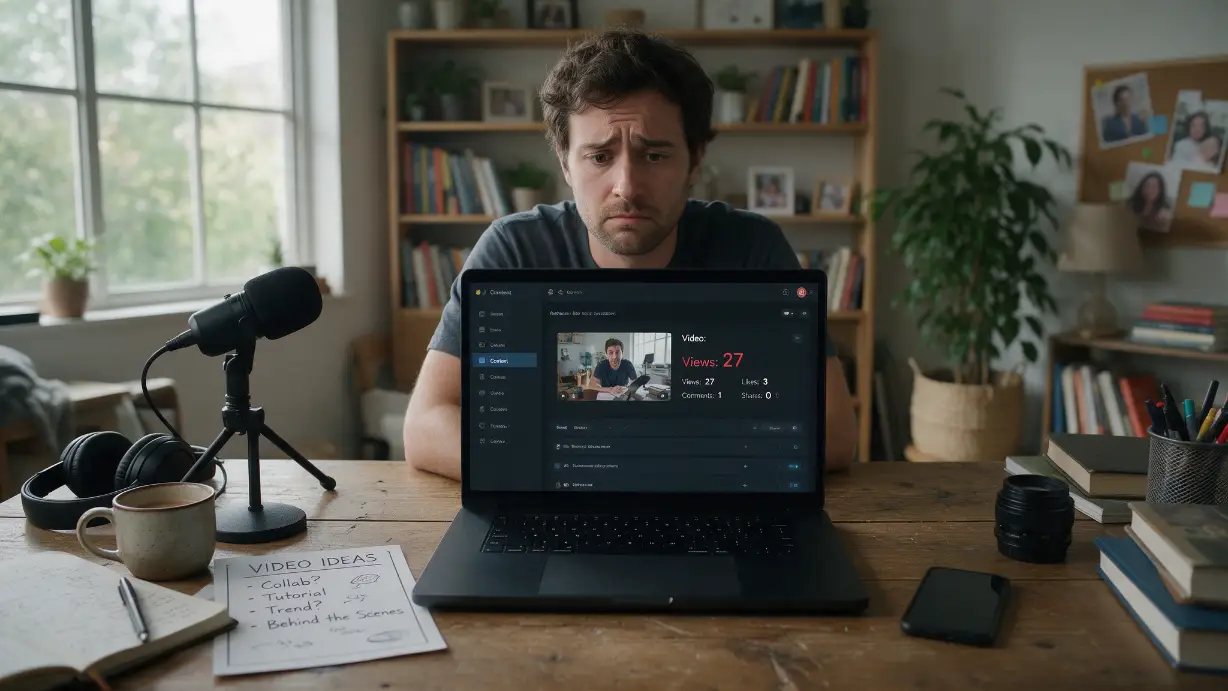
Picture a channel with 40 subscribers whose latest video suddenly shows 5,000 views and an average view duration of a few seconds. The numbers disagree with each other, and anyone who reads them, starting with a sponsor, can see it.
Then there's money. YouTube's invalid traffic rules define it as activity that doesn't come from a real user or a user with genuine interest, and they list automated or incentivized traffic from third parties as an example. On a monetized channel, that can mean earnings withheld, changed, or offset, ad serving limited, and payments delayed up to 90 days while YouTube investigates. Significant violations can end in demonetization. Deleting or unlisting the videos won't bring the money back.
What makes the risk worse
A policy violation has no safe version, but some choices stack more violations on top of it.
- Pairing views with bought subscribers or comments. The same policy covers each one.
- Using a service on a live stream. Viewbotting is named in the policy.
- Mentioning or linking the seller in a video or description. That's its own banned content type.
- Repeating it after a warning. The 90-day window is where a warning turns into a strike.
And don't trust any seller who gives you a "safe" number. YouTube publishes no view count, delivery speed, or threshold that turns a violation into a permitted purchase, and it doesn't say how it detects artificial traffic. A seller quoting you one is guessing.
If you've already bought views
Don't panic, and don't try to scrub it. Do this instead:
- Stop buying more.
- Remove any mention or link to the seller from your videos and descriptions.
- Leave the videos up. YouTube says editing, deleting, or unlisting won't recover earnings tied to invalid traffic.
- Read any warning email properly and think about the optional policy training, since finishing it starts the 90-day expiry.
Then check one thing today. Open YouTube Analytics, find the video where views jumped, and put average view duration next to it. A jump in views with watch time that barely moved tells you which numbers to stop quoting in pitches.
The paid route that stays inside the rules
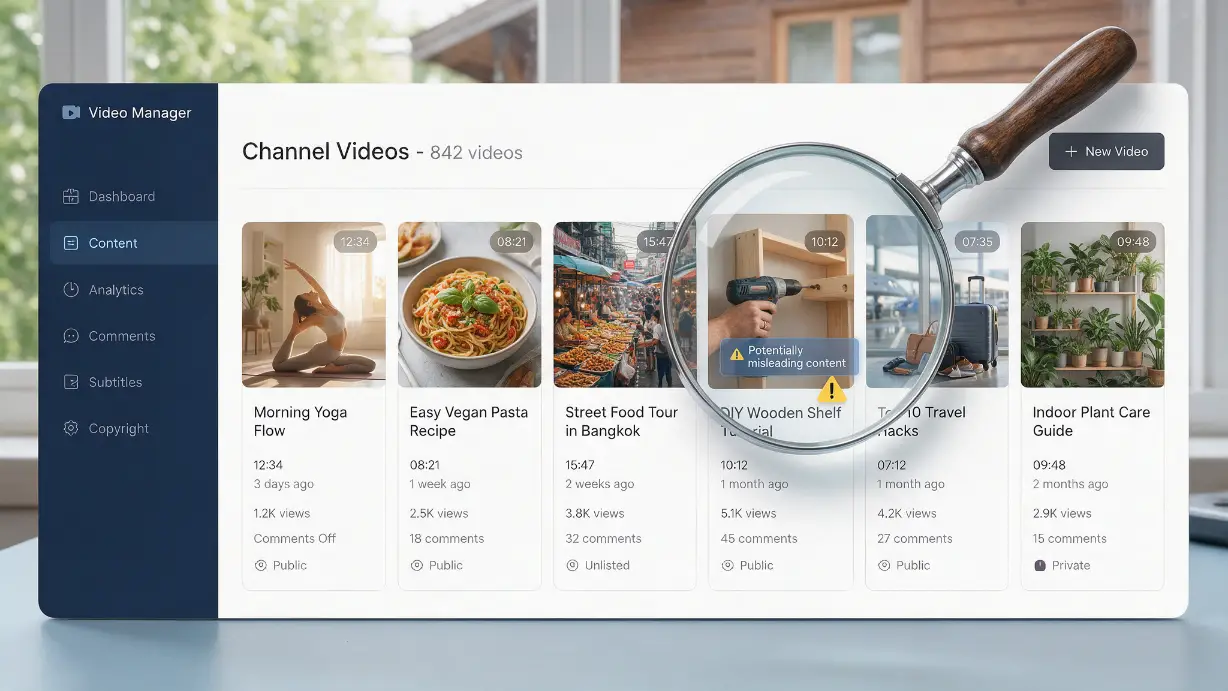
YouTube sells views itself. The Promotions tab in YouTube Studio runs simple campaigns, and Google Ads video campaigns give you more control. The difference is what a view means. On a skippable in-stream ad, a view counts when someone watches or engages for at least 30 seconds, or to the end if the ad is shorter. On in-feed ads it's a click on the thumbnail or 10 seconds of autoplay. On Shorts ads it's 10 seconds, or a click on the call to action, Like, Comments, or Share. You set a target cost per view, and Google bids toward it.
The tradeoff: you're paying for people who watched, not people who stayed. A weak first minute still loses them, and a promotion won't turn a viewer into a subscriber on its own.
When a cold start is the real problem
A new channel has a cold start problem. Nobody has clicked yet, so YouTube has nothing to compare your video against, and a low count looks like a verdict when it's really a lack of data. That's why buying views is tempting.
The honest tradeoff is that views from any source don't create retention. We sell YouTube views at GTR Socials, so weigh that: no provider, us included, can remove the policy risk, and a purchased number never replaces a video people finish.
What moves a cold channel is smaller and less exciting. A title and thumbnail that promise one thing, a first 30 seconds that delivers it, and a short series so someone who finished video one has a reason to click video two.
FAQ
Does YouTube know when you buy views?
Assume it can. YouTube says artificial traffic isn't counted and can lead to strikes, but it doesn't publish how it identifies that traffic. A plan that depends on it going unnoticed is a weak plan.
Even when nothing happens to your channel, views that don't watch leave your analytics less useful.
Can you get banned for buying YouTube views?
Yes, but usually not first. A first violation is typically a warning, then strikes, with termination possible at three strikes inside 90 days. YouTube can also terminate without warning for severe abuse, or for a channel dedicated to violating the policy.
How often it acts isn't published, so nobody can give you an honest probability.
Will buying views affect monetization?
It can. YouTube's invalid traffic rules allow earnings tied to that traffic to be withheld, changed, or offset, and significant violations can lead to demonetization.
Are YouTube's own promotions allowed?
Yes. The Promotions tab in YouTube Studio and Google Ads video campaigns are YouTube's own paid routes, and you pay for views that meet YouTube's definition of a view for that ad format. Your video still has to follow the community guidelines.
Is there a safe number of views to buy?
No. YouTube publishes no safe volume, speed, or threshold. Its policy asks whether engagement comes from a person who genuinely wants to interact with the content, not how large the number is.
Comments (0)