

If you've spent any time staring at a subscriber count that won't move past double digits, you've probably had the thought: what if I just bought my way to 1,000? Let's answer the question properly — without the sales pitch and without the scare tactics.
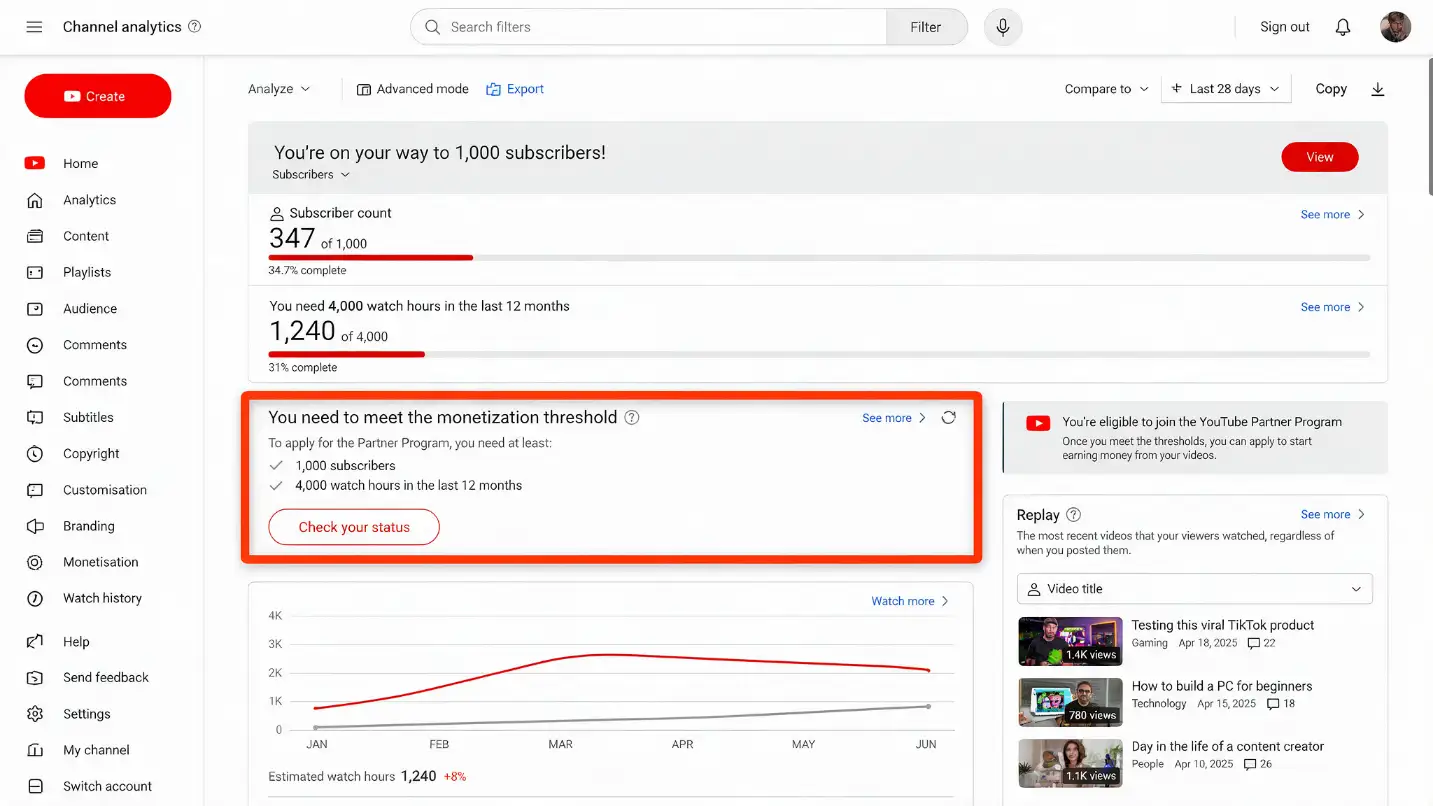
If you've spent any time staring at a subscriber count that won't move past double digits, you've probably had the thought: what if I just bought my way to 1,000? It's not a crazy question. That number specifically stands between you and monetisation, and watching it crawl upward one subscriber at a time while your content quietly gets better and better is genuinely demoralising.
So let's answer the question properly, without the sales pitch and without the scare tactics. What does YouTube actually say about this, what really happens when it goes wrong, and — maybe more importantly — does buying subscribers even solve the problem you think it solves?
What YouTube's Rules Actually Say
YouTube's Terms of Service prohibit using "automated means" to interact with the platform, and the Fake Engagement policy under the Community Guidelines is specific about what that covers: anything that artificially inflates views, likes, comments, or other metrics — whether through automated systems or by serving content to unsuspecting viewers — is a violation.
Read that wording carefully, because it matters more than most articles on this topic give it credit for. The policy is built around automation and deception, not around the mere existence of a third-party service. It structurally can't distinguish between a real, genuine person who subscribed because a promotional campaign put your channel in front of them, and a real person who subscribed because YouTube's own recommendations did the same thing. A human choosing to click "subscribe" is a human choosing to click subscribe, however they arrived at your channel. What the policy actually targets is fake accounts, bots, and click farms manufacturing activity that never involved a real viewer at all.
The single most important thing to understand before you spend a dollar on this: real account versus manufactured activity is the dividing line in the policy. That distinction determines the risk profile of any service you're evaluating — far more than the fact of paying for subscribers does on its own.
What Actually Happens When YouTube Catches It
Here's where a lot of scare-headline articles overstate things. YouTube runs platform-wide bot purges several times a year, and if your subscriber count is padded with bot or click-farm accounts, expect a chunk of it to disappear during one of those sweeps — sometimes hundreds of subscribers vanishing in a single day. That's the standard, most common consequence: a quiet correction, not a knock on the door.
Channel strikes, suspensions, and outright termination are generally reserved for repeat or egregious cases — large-scale, obviously automated inflation, especially when it's tied to monetisation fraud. A creator who buys a moderate batch of subscribers once and never repeats the mistake is far more likely to just watch that number erode over the following weeks than to face any formal penalty. That's not a green light, but it is a more honest picture than "you will get banned," which is the line most warning articles lean on for effect.
At one end: bought bot subscribers quietly disappear in the next purge, money wasted, no other consequence. In the middle: engagement rate damage (more on this below) that suppresses real reach. At the far end: repeat, large-scale, monetisation-fraud-level behaviour drawing a formal strike or termination. Most single, moderate purchases from real-account services sit much closer to the first outcome than the last.
Why Bot Subscribers Actively Work Against You
This is the part that genuinely surprises people, because it has nothing to do with YouTube catching you — it's simple math working against your own channel.
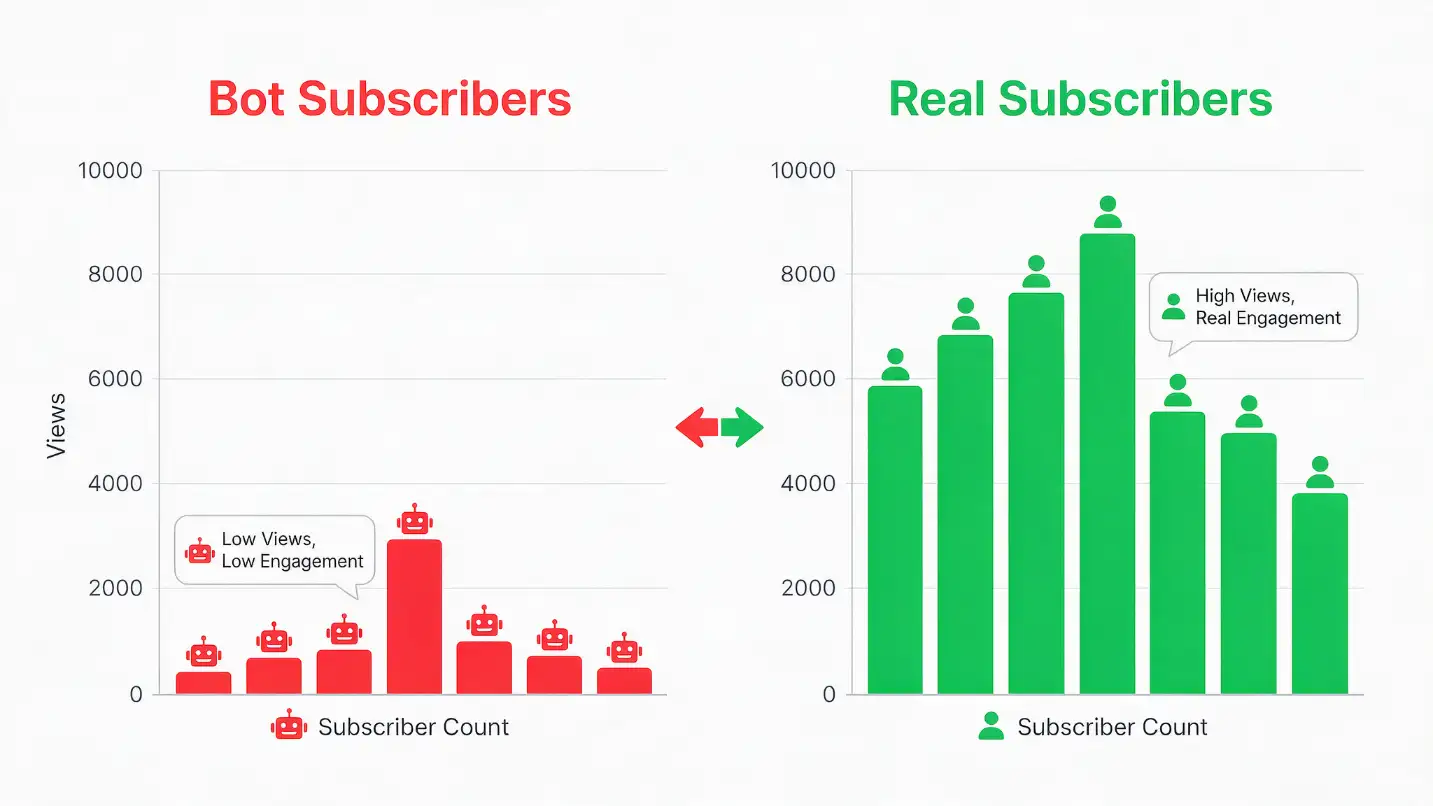
YouTube tracks what amounts to a subscriber engagement rate: the percentage of your subscriber base that actually watches, likes, or comments on what you post. Headless bot accounts never watch a single video. They exist purely as a number. So the moment a meaningful chunk of your subscriber list is inactive bots, that engagement rate craters — and YouTube's recommendation system reads a low engagement rate as a signal that your content isn't resonating, which means it shows your videos to fewer people, not more.
"You end up paying money to make your own distribution worse — about as far from the intended effect as you can get."
🤖 What Bot Subscribers Do to Your Channel
- Drag down subscriber engagement rate
- Signal to algorithm that content isn't resonating
- Reduce video distribution to real viewers
- Disappear in purges, leaving a visible drop
- Obvious to brand partners reviewing your metrics
- Hurt average view duration and audience retention stats
✅ What Real-Account Subscribers Do
- Maintain a credible subscriber engagement rate
- Hold up to platform detection and metric scrutiny
- Contribute to the social proof first-time visitors see
- Survive purges designed to remove bot accounts
- Give algorithm a legitimate signal to work with
- Build the early credibility gap creators actually need
The cheap bot route doesn't just risk a purge later. It can actively suppress your channel's real reach in the meantime. This is the honest case against bottom-tier bot panels that most vendor sales pages conveniently skip — not that YouTube might catch you, but that the bots are already working against you before that even happens.
The Monetisation Trap Nobody Mentions
Here's the detail that matters most if the real goal behind all this is unlocking ad revenue: subscriber count is only half of what YouTube Partner Program eligibility requires, and it's arguably the easier half to fake.
Right now, joining YPP for ads and Premium revenue requires 1,000 subscribers plus either 4,000 qualified public watch hours in the past 12 months, or 10 million qualified Shorts views in the past 90 days. From February 1, 2027, that watch-hour bar doubles to 8,000 hours (or 20 million Shorts views) for new applicants — the subscriber requirement itself is staying at 1,000, but the performance side of the equation is getting meaningfully harder.
1,000 Subscribers + Either
4,000 watch hours (12 months) or 10M Shorts views (90 days)
Watch Hours Double
8,000 watch hours (12 months) or 20M Shorts views (90 days) — subscribers stay at 1,000
Subs Don't Move Watch Hours
Inactive bot subscribers contribute zero watch time — the harder, more important metric stays completely untouched
Watch hours, unlike a subscriber count, cannot be manufactured by an inactive account. They require someone, somewhere, actually sitting and watching your content for real minutes. A thousand bought subscribers who never press play do absolutely nothing to move that number, and if anything, they make your average view duration and audience retention numbers look worse to YouTube's review systems during the eligibility check — the exact opposite of what you're trying to achieve. Even in the best-case scenario where nobody purges a single purchased subscriber, buying your way to 1,000 subs doesn't actually get you monetised. It just changes which number you're stuck below.
Where the Real Risk Actually Concentrates
If there's one honest takeaway from all of this, it's that "buying subscribers" isn't one uniform action with one uniform risk. The entire risk profile hinges on where those subscribers come from.
Bottom-tier bot panels — the kind advertising a thousand subscribers for a few dollars — are where nearly all the genuine danger lives. These are headless accounts spun up through proxies, with no real person behind them, no activity, no engagement, and a very short shelf life before the next purge finds them. Detection systems look for exactly the fingerprints these accounts leave behind: sudden unnatural spikes in your subscriber count, engagement rates that don't match your subscriber total, and profiles with no history, no picture, and no activity of their own.
Services built around real, active accounts sit in genuinely different territory. The subscribers are actual people, the delivery is paced to look like normal growth rather than an overnight spike, and — critically — the accounts have the kind of history and activity that doesn't trip the same detection fingerprints bot farms do. It's not "risk-free" in an absolute sense, since the policy technically covers any paid promotion of subscriber growth, but it's a fundamentally different category of risk than a $5 bot panel, and it's the difference between a channel that grows and holds versus one that spikes and quietly bleeds numbers a month later.
What Actually Matters If You're Considering This
A few practical things separate a reasonable decision from a wasted one.
Legitimate growth services only ever need your channel URL or handle. Anything asking for login credentials is operating a very different kind of scheme — account theft, not subscriber growth.
A subscriber count that leaps overnight is exactly the pattern detection systems are tuned to flag. A natural-looking curve blends into normal channel growth and doesn't create the anomaly that draws review.
If ad revenue is the actual goal, watch hours — which require genuine viewers — are the harder and more important number to build, and no subscriber purchase touches that. Know what you're actually solving for before you spend anything.
A padded subscriber count on a channel with three uploads and no consistency won't hold up to scrutiny from viewers, brands, or YouTube itself. This only works as a kickstart on top of content that already deserves the audience.
The Cold Start Problem, Again
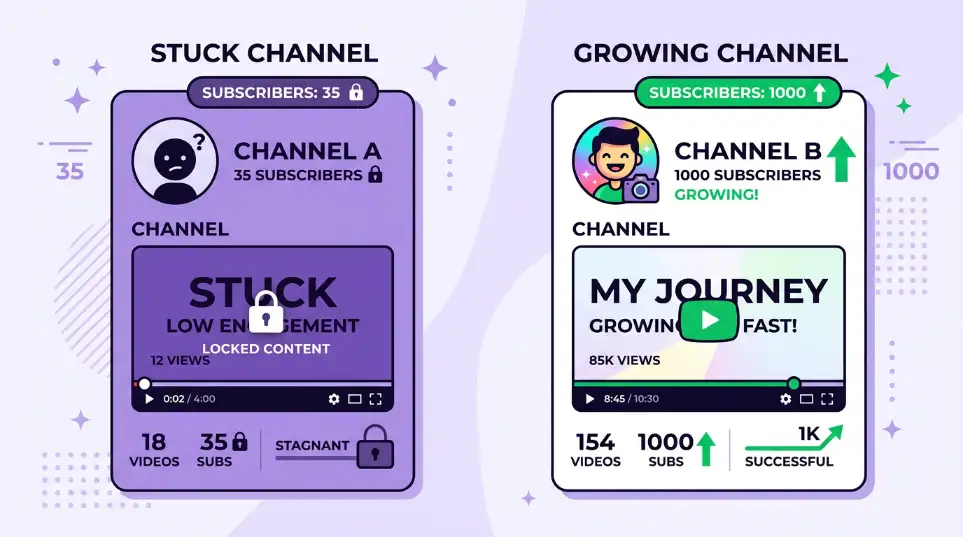
The reason this tactic exists at all comes back to a real, frustrating structural issue: new channels struggle to get any traction because YouTube's recommendation system leans on existing signals — subscriber count among them — to decide who to trust with distribution. A channel with 40 subscribers and genuinely excellent videos can sit invisible for months, simply because nothing has given it the early signal of legitimacy the algorithm is looking for.
"That's the honest use case — not manufacturing fake popularity, but giving a channel that already deserves attention a fair shot at clearing that early credibility gap."
GTR Socials' YouTube subscriber service focuses specifically on real, active accounts delivered at a natural pace, built to help a growing channel get past that first wall rather than produce a number that a purge quietly erases two months later. It's worth understanding, separately, how views carry their own distinct risk and delivery considerations if you're weighing more than one growth lever at once — subscribers and views aren't interchangeable, and they don't carry identical risk profiles.
A channel that already has solid content and a consistent upload schedule — but is stuck invisible because the algorithm has no existing signal to trust — is the right candidate for this kind of boost. It's giving good content a fair shot at being discovered, not papering over a content problem with a number that means nothing on its own.
FAQ: Buying YouTube Subscribers
The Verdict
Not the account-ending disaster some articles claim — and not the risk-free shortcut vendors promise either
The truth sits in the middle: the real danger concentrates almost entirely in cheap bot panels, which hurt your engagement metrics even before YouTube ever notices, while real-account services carry a genuinely different, lower risk profile.
And regardless of which route you take, subscriber count alone was never going to unlock monetisation — watch hours are the harder bar, they're about to get harder still, and no amount of subscribers, bought or organic, substitutes for people actually watching your videos.
Know what you're actually solving for before you spend anything.
If your channel has real content worth watching and you're stuck in the cold start gap, a real-account subscriber service at a natural delivery pace is a reasonable tool for addressing the credibility problem — not the monetisation problem, which requires genuine viewers watching your content. If you're looking for a shortcut past the content or the watch hours, no subscriber purchase does that, and the bot panels that promise it will actively damage the metrics you actually need.
GTR Socials YouTube Subscribers — Built for the Right Use Case
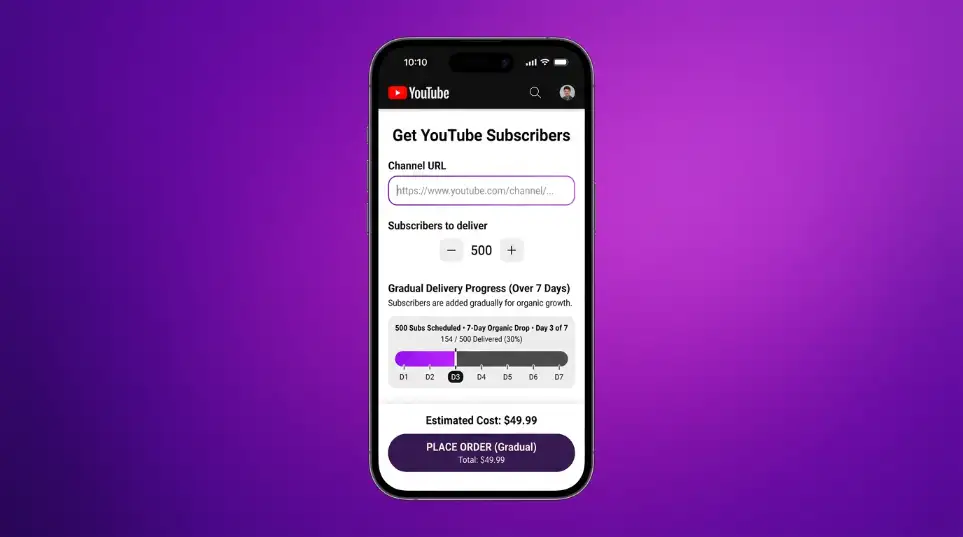
GTR Socials' YouTube subscriber service focuses on real, active accounts delivered at a natural pace — built to help a growing channel get past the cold start wall rather than produce a number that a purge quietly erases two months later.
We only need your channel URL or handle. Subscribers arrive gradually over hours and days rather than in an overnight spike. The accounts behind the delivery are real, active YouTube profiles with watch history and channel activity rather than headless bots that trip detection fingerprints.
It's worth understanding separately how views carry their own distinct risk and delivery considerations if you're weighing more than one growth lever at once — subscribers and views aren't interchangeable, and they don't carry identical risk profiles. If watch hours are the number you need to move, that's a different conversation and a different service.
▶️ Help Your Growing Channel Clear the Credibility Gap
Real accounts. Natural delivery pace. Channel URL only — never a password. GTR Socials' YouTube subscriber service is built for creators with content worth watching who are stuck in the cold start problem.
Comments (0)