

When we started Nemo Group UK, social media was the last thing on our minds. We were focused on the work itself — getting to site on time, doing a job well, making sure a client's home looked better than we found it. Here's what we learned when we finally started taking it seriously.
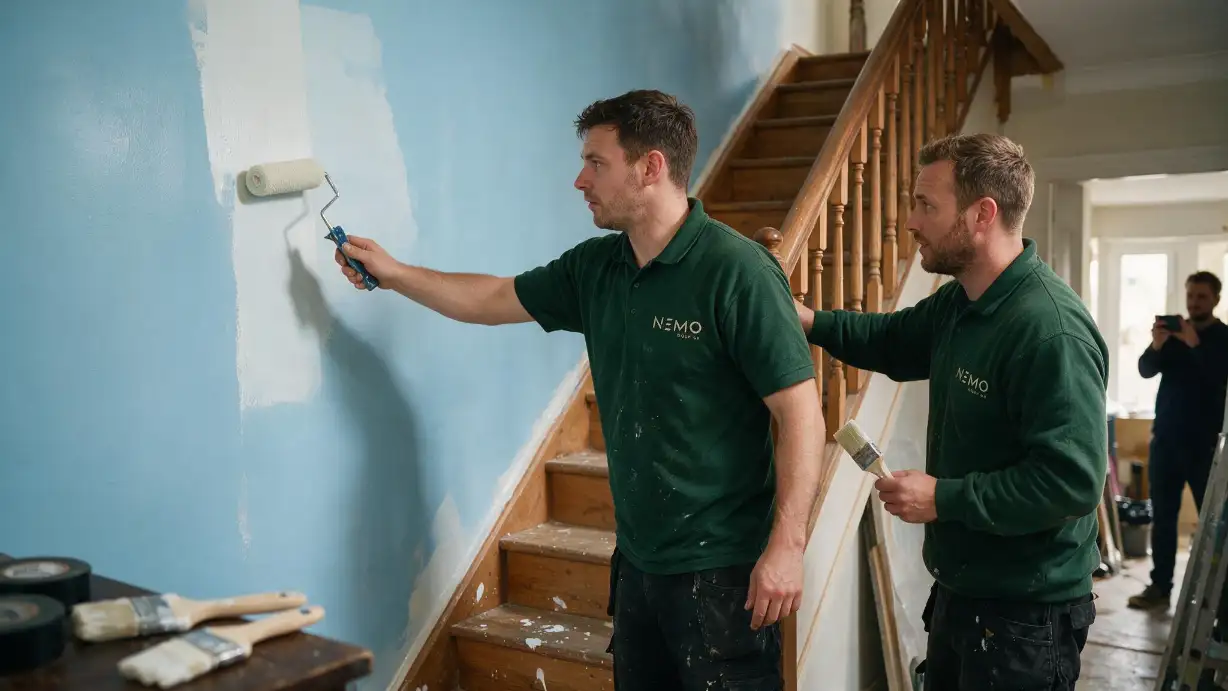
When we started Nemo Group UK, social media was the last thing on our minds. We were focused on the work itself — getting to site on time, doing a job well, making sure a client's home looked better than we found it. Posting about it felt like an afterthought, if we thought about it at all.
A few years in, we realised that was a mistake. Not because likes and followers matter for their own sake, but because the businesses we were losing quotes to weren't necessarily better than us — they just looked more established online. So we started from close to zero, made a lot of the mistakes any trades business makes, and slowly worked out what actually helps. Here's what we'd tell any other business owner starting the same journey.
We Started With Nothing, and Assumed That Was Fine
For a long time, our approach was simple: do good work, get referrals, let word of mouth carry the business. That's not a bad strategy — it's still where a lot of our work comes from. But we underestimated how much people check online before they even pick up the phone.
A potential client would hear about us from a neighbour, then go looking for us on Instagram or Facebook to see recent work, and find... not much. That gap cost us more quotes than we realised at the time.
"The businesses we were losing quotes to weren't necessarily better than us — they just looked more established online."
Lesson 1: Photos of the Work Matter More Than Anything Else We Post
Post the Work — Actual Before-and-Afters From Actual Jobs
The single biggest shift for us was simple: post the work. Not polished stock photography, not generic tips copied from somewhere else — actual before-and-after shots from actual jobs. A freshly painted living room, a bathroom mid-strip-out, a finished exterior repaint. People considering a renovation want to see real results from a real team, and nothing we've posted has performed better than honest project photos. You can see the same instinct across the projects we've completed — it's the same material, just repurposed for social media instead of sitting on a portfolio page.
People considering a renovation want to see real results from a real team. "Real beats polished" isn't just a social media content principle — it's what actually converts a potential client who's already on the fence into someone who picks up the phone. Stock imagery and generic tips don't answer the question they're actually trying to answer: can this team do what I need done?
Lesson 2: Consistency Beats Perfection
Show Up Regularly — Even With Something Small
We used to post in bursts — a flurry of updates after a big job, then silence for weeks. It didn't work. What actually moved the needle was showing up regularly, even with something small: a quick site update, a tip about maintaining a newly painted surface, a short clip of the team at work. A mediocre post every week outperformed a great post every two months, largely because it kept us visible in the moments people were actually deciding who to call.
Social media presence is less about any individual post and more about whether you're visible when someone happens to be looking. A potential client searching for a trades business in your area who sees your last post was three weeks ago draws a conclusion — whether or not it's a fair one. Consistent small updates beat sporadic great ones every time.
Lesson 3: Customers Check Before They Call, Every Time
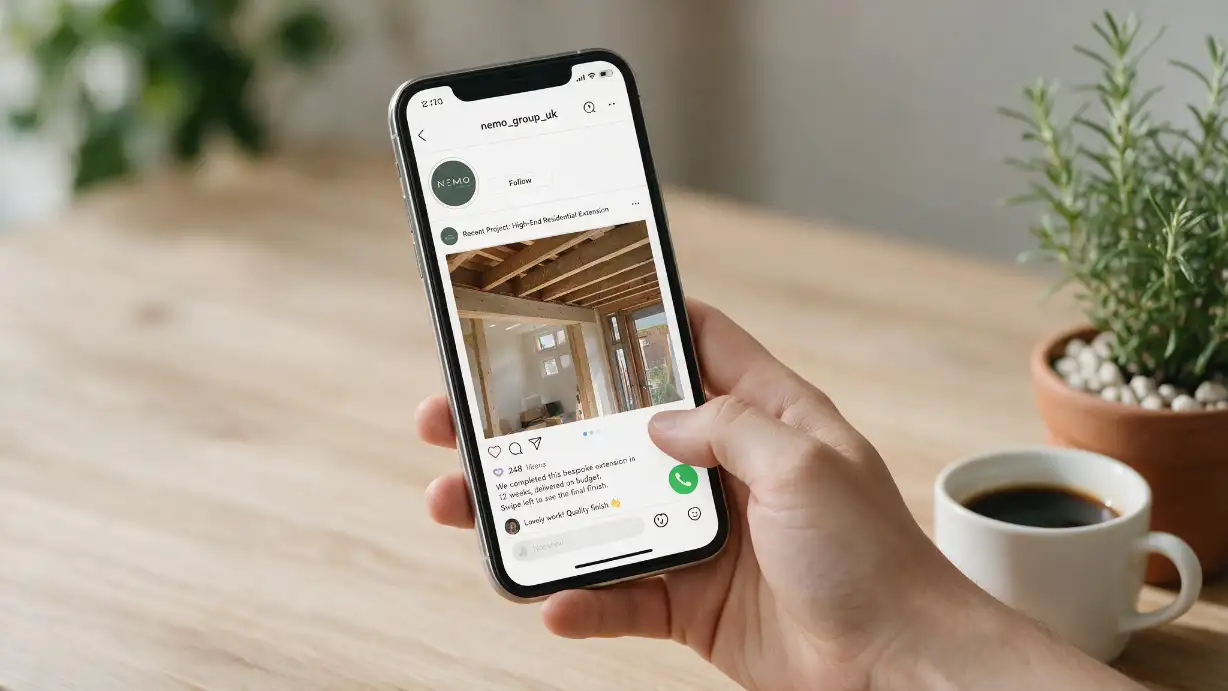
Social Media Is How People Vet You Before They Meet You
This one surprised us early on. Clients would mention, almost in passing, that they'd looked through our page before getting in touch — checking recent work, reading comments, seeing how we responded to questions. Social media had quietly become part of how people vetted us, the same way they'd check reviews. Once we understood that, we stopped treating it as marketing fluff and started treating it as part of how we build trust before a client ever meets us in person.
Once we understood that social media was functioning as a trust signal rather than a broadcast channel, how we approached it changed completely. Every post became part of a portfolio that a potential client might look through before deciding whether to request a quote. That's a much more useful frame than "how do we get more followers" — and it's the one that actually improved our conversion rate from leads to quotes.
Lesson 4: We Didn't Have Time to Do It Properly Ourselves
Good Intentions and Inconsistent Execution — The Pattern Every Trades Business Knows
Here's the honest part. Between running jobs, managing clients, and keeping projects on schedule, social media kept sliding down the priority list — not because it didn't matter, but because there simply weren't enough hours in the day to plan content, post consistently, and actually engage with people asking questions in the comments. Eventually, we brought in outside help to manage that side of things properly, working with GTR Socials on content planning and posting consistency, which freed us up to focus on the actual renovation work while our online presence kept moving in the background.
If you're a trades business reading this and recognising the same pattern — good intentions, inconsistent execution — that's usually the point where handing it to someone who can stay consistent makes more sense than trying to squeeze it in yourself.
What We'd Tell Any Trades Business Starting From Scratch
Even if it's not perfectly lit or professionally shot. Real beats polished — genuine project photos from real jobs outperform everything else every time. Start with your phone and the next job you complete.
Once a week, done consistently, beats daily posting for a fortnight and then nothing. The algorithm rewards consistency, and so do potential clients scanning your recent activity before calling.
A page that goes quiet after a question looks worse than having a small following. People notice how you respond — or don't — before they decide whether to get in touch. An unanswered comment is a missed opportunity.
That time rarely arrives on its own — either block it out deliberately or get help with it early. The gap between "we should be doing this" and "we're actually doing this" is where most trades businesses lose ground to competitors who prioritised it earlier.
The Decision to Get Help — Working With GTR Socials
The moment we recognised the pattern — good intentions, inconsistent execution — we had two options: build a more disciplined internal process, or get specialist help for the things we weren't going to do consistently ourselves.
We chose the latter. Working with GTR Socials on content planning and posting consistency meant our online presence stopped being something that happened when someone remembered to do it, and started being something that happened reliably in the background while the team focused on the work that actually pays the bills.
The choice isn't between doing social media well and doing it poorly. For most trades businesses, the practical choice is between having a consistent presence managed by someone who does this full time, and having an inconsistent presence managed between site visits and client calls. If you're recognising your own situation in that description, it's worth having an honest conversation about what "getting help" would actually look like.
Key Lessons Summary
Four things changed how Nemo Group UK thinks about social media — and they all apply to any trades business starting from the same place.
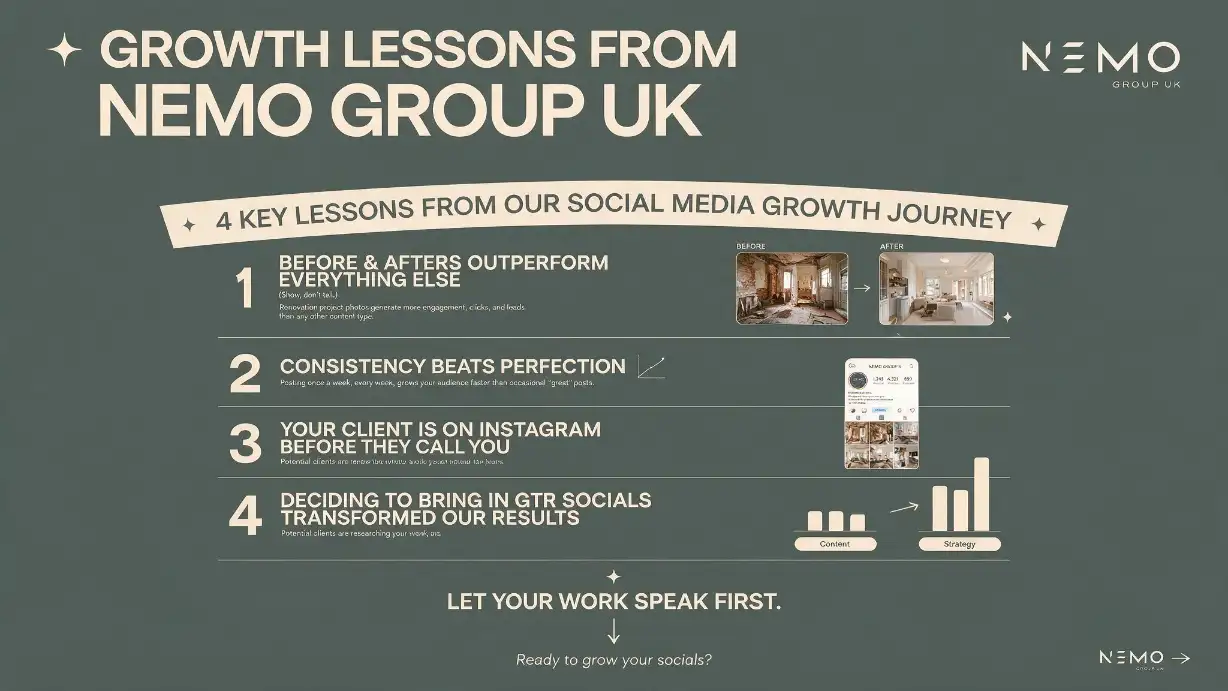
📸 Lesson 1 — Real Content Wins
Actual before-and-after project photos outperformed every other content type. People want to see the real work, not polished abstractions of it.
📅 Lesson 2 — Consistency Over Quality
A mediocre post every week beat a great post every two months. Visibility in the moments people are deciding who to call matters more than any individual piece of content.
👀 Lesson 3 — It's a Trust Signal
Clients check social media before calling — the same way they check reviews. Once we understood this, the whole purpose of posting changed.
⏱️ Lesson 4 — Get Help Early
Good intentions and inconsistent execution is the pattern. Recognising that pattern early and getting specialist help frees the team to focus on the work itself.
Final Thoughts
We didn't get social media right straight away, and we still don't treat it as separate from the actual business — it's just another way of showing people the kind of work they can expect when they work with Nemo Group UK. If you're a business owner in a similar spot, figuring out the same thing from scratch, hopefully some of this saves you a bit of trial and error.
"Social media is just another way of showing people the kind of work they can expect when they work with us."
The businesses that win online aren't necessarily doing anything more sophisticated than the ones that don't — they're just showing up consistently, posting honest work, and treating their online presence as part of the client relationship rather than separate from it. That's achievable for any trades business willing to commit to doing it properly.
Got a Project in Mind? Get in Touch
Whether you've got a specific renovation in mind or you're at the early stages of thinking about what's possible, we're happy to talk it through. A free consultation costs nothing, and it gives us both a clearer picture of what a project would actually involve.

🏠 Nemo Group UK — Free Consultation
Got a project of your own in mind? We're happy to talk through what it would involve.
020 3576 6549📱 Is Your Trades Business in the Same Position?
GTR Socials helps trades businesses, contractors, and service companies build consistent social media presences that convert online visibility into real enquiries — so you can focus on the work itself.
Comments (0)