

Alex streamed 800+ hours over 22 months and earned $127 total — an effective rate of $0.16/hour. Three months after rebuilding his strategy: $1,440–$2,000/month. Same streamer, same hours, completely different understanding of how Twitch money actually works.
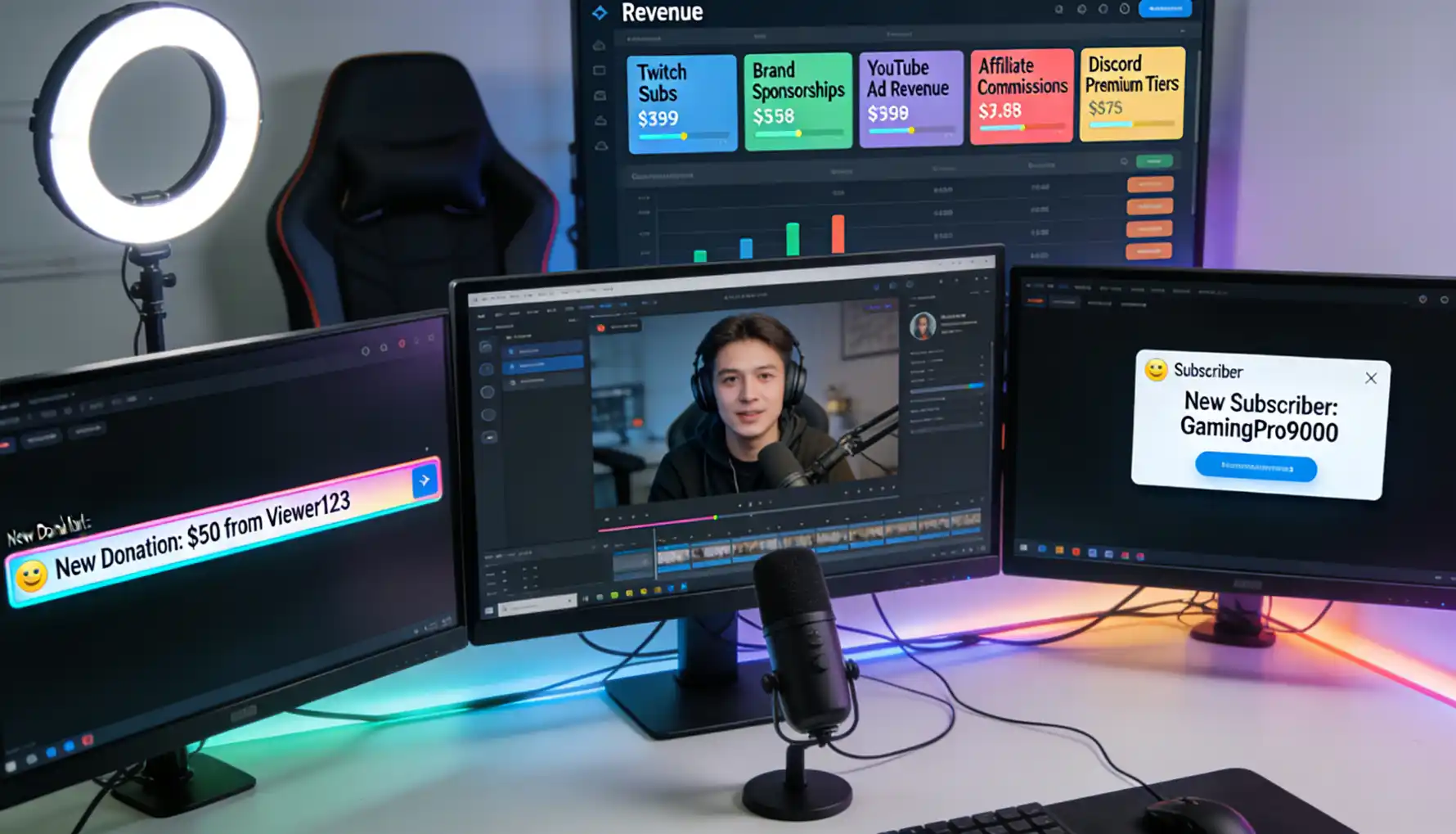
Four months ago I sat down with a streamer named Alex, who'd been streaming on Twitch for nearly two years with heartbreaking results.
He streamed 5 nights a week, 3–4 hours per session. He'd invested in a quality microphone, camera, lighting, and custom overlays. He played popular games, kept up conversation, and maintained a regular schedule. From the outside, he was doing everything "right."
❌ After 22 Months of Streaming
✅ Three Months After Rebuilding Strategy
"I see streamers who have just a few more viewers than me making thousands a month," he told me, exhausted. "What am I missing? How does one make money on Twitch?"
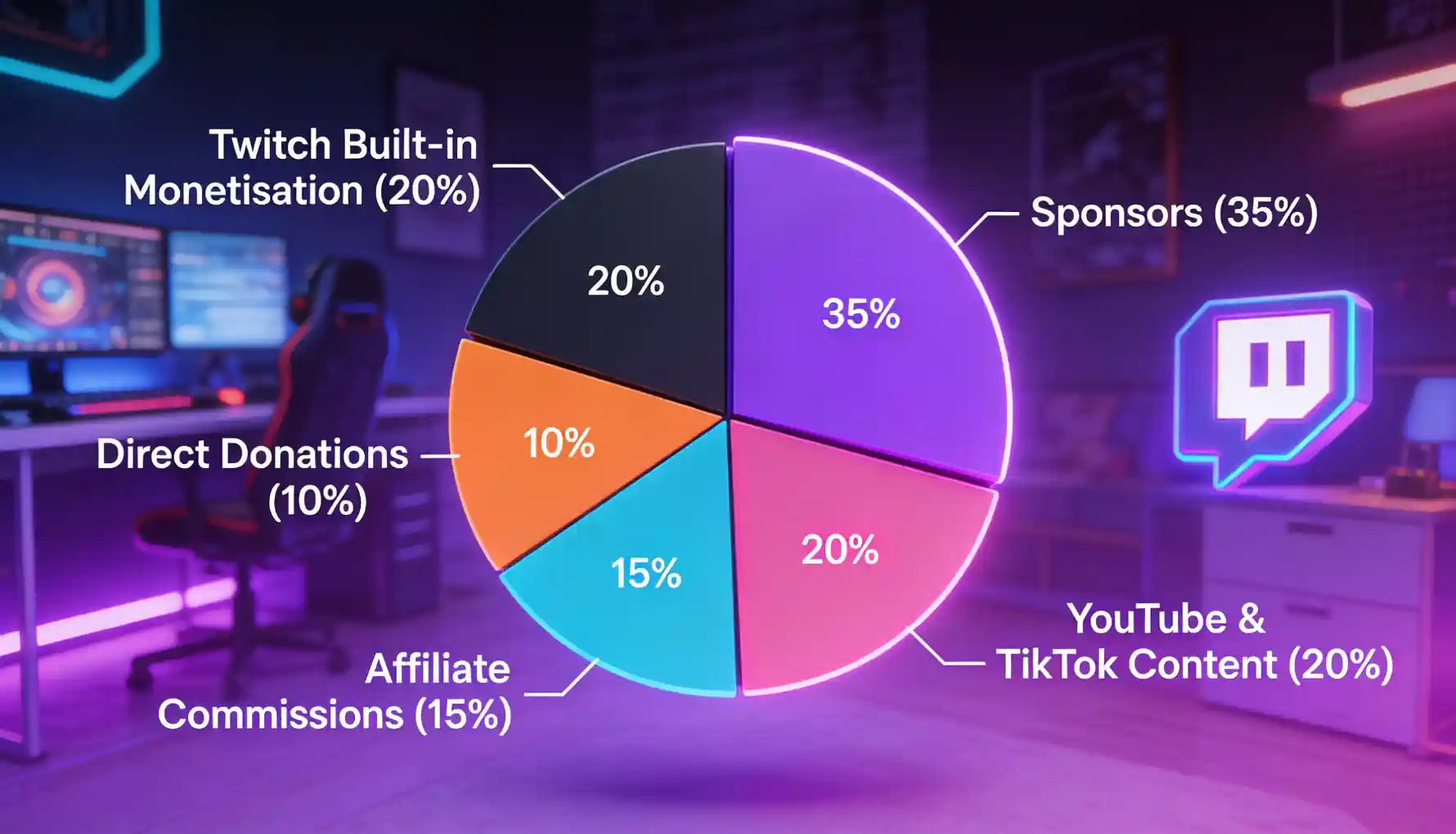
I had to tell him what most Twitch guides hide under aspirational success stories: "The subscription and ad revenue you're chasing? That's not how most successful streamers make real money — especially in the beginning. You're optimising for the wrong income streams. The streamers making thousands aren't making it primarily from Twitch's built-in monetisation. They're making it from sponsors, donations, YouTube repurposing, affiliate marketing, and diversified revenue that Twitch enables but doesn't directly pay for."
Built-in monetisation (subscriptions, bits, ads) is just the tip of the iceberg. Real income comes from diversifying revenue streams, building off-platform presence, and leveraging your Twitch community across multiple monetisation methods that exist outside Twitch's payment structure. This guide covers every method, with realistic requirements and income expectations for each.
Twitch's Own Monetisation Methods
First, let's look at Twitch's official revenue streams — and what's realistically possible from each.
Twitch Affiliate Program
OfficialTwitch's core monetisation tier that opens up subscriptions, bits, and ad revenue. Requirements: 50+ followers, 7+ unique broadcast days in last 30 days, 8+ hours streamed in last 30 days, and 3+ average concurrent viewers over the last 30 days.
10–30 avg viewers: $7.50–$25/month · 50–100 avg viewers: $37.50–$100/month · 100–500 avg viewers: $125–$500/month · 500–1,000 avg viewers: $500–$1,250/month. Bits add roughly 10–20% on top of subscription revenue. Ads generate $3–5 per 1,000 impressions.
- Official Twitch revenue
- Easy to become an Affiliate
- Viewers can donate directly
- Passive once set up
- Very low income until 100+ avg viewers
- Not sustainable as primary source
- Twitch takes 50% of sub revenue
- $100 minimum payout threshold
Twitch Partner Program
Premium TierTwitch's premium tier with better revenue share and more features. Requirements (much harder): 75+ average concurrent viewers over 30 days, 12+ broadcast days per month, 25+ hours streamed each month, and consistent compliance with Community Guidelines. Benefits over Affiliate: better revenue split (some Partners negotiate 60/40 or 70/30), more emote slots, priority support, and better discoverability.
100–500 avg viewers: $500–$2,000/month · 500–1,000 avg viewers: $2,000–$5,000/month · 1,000–5,000 avg viewers: $5,000–$20,000/month · 5,000+ avg viewers: $20,000–$100,000+/month.
External Income Streams (Where the Real Money Is)
This is where most of the money comes from for successful streamers — and what Alex was completely missing.
Direct Donations (PayPal, Streamlabs, etc.)
ExternalViewers sending money directly through third-party services, bypassing the Twitch cut. Set up a PayPal donation link, Streamlabs donations page, or StreamElements tip jar shown on stream with alerts. You keep 95–97% (only small payment processing fees). No minimum payout and instant access to cash.
Small/medium streamers: $20–$100/month · Large streamers: $500–$5,000+/month from loyal fans and occasional large donors ("whales" can make a huge difference)
Brand Partnerships and Sponsorships
Highest PotentialCompanies pay you to promote products, games, or services while you stream. Find deals through sponsorship platforms (Gamesight, Matchmade, PowerSpike) or through direct outreach to gaming peripheral brands, energy drink companies, gaming chair companies, VPN and software providers. Types of deals include one-off sponsored streams ($100–$5,000), monthly retainers ($500–$10,000+), affiliate partnerships (commission-based), and product seeding.
100–500 viewers: $50–$300/sponsored stream · 500–1,000 viewers: $300–$1,000/stream · 1,000–5,000 viewers: $1,000–$5,000/stream · 5,000+ viewers: $5,000–$50,000+/campaign
YouTube Content Repurposing
Passive IncomeMaking YouTube videos from your Twitch streams for extra income. Content types: stream highlights (5–15 min best moments), full VODs, how-to videos, compilation videos, and reaction content. YouTube ad revenue pays $3–8 per 1,000 views. This is passive income from content you've already created — Alex earned $120–180/month from highlights with minimal extra work.
10K views/month: $30–80 · 100K views/month: $300–$800 · 500K views/month: $1,500–$4,000
Affiliate Product Marketing
PassiveEarn commissions promoting gaming products, services, or gear via affiliate links. Common programs: Amazon Associates (1–10%), gaming peripheral companies (10–20%), software/VPNs (20–50%), game key sites (varies). Integrate links through Twitch panels, verbal stream mentions, chat commands, and a dedicated setup/gear page.
Small streamers (10–50 viewers): $20–$100/month · Mid-sized (100–500 viewers): $100–$500/month · Large (1,000+ viewers): $500–$5,000+/month
Additional Revenue Methods
These three methods round out a fully diversified streaming income portfolio — together they can add $300–$1,000+/month.
Selling Merchandise
CommunitySelling branded merchandise (t-shirts, hoodies, mugs, etc.) to your community. Platforms: Streamlabs Shop, Teespring/Spring, Redbubble, or custom Shopify stores. Start when you have 100+ average viewers — you need an audience large enough to support sales. Print-on-demand means no upfront inventory costs.
$5–$15 profit per item · 5–50 units/month depending on audience size · Average monthly: $50–$500 for most streamers
Coaching and Consulting
High Hourly RatePaid coaching for games you're skilled at, or streaming advice for other creators. Game coaching: $15–$100/hour. Streaming setup help: $30–$75/hour. Content strategy consulting: $50–$150/hour. Requires demonstrated expertise, professional presentation, and communication skills.
5–10 hours/week: $300–$1,000/month · Part-time coaching: $1,000–$3,000/month. Alex was earning $200–$400/month from coaching at only 35–50 average viewers.
Patreon or Premium Discord Tiers
Recurring RevenueMonthly subscribers get perks or special community access. Offer private Discord channels, streaming exclusives, subscriber game nights, behind-the-scenes footage, or early content access. Price tiers typically: $5/month (basic perks), $10/month (more access), $25/month (everything plus personal perks). Roughly 5–10% of your community converts to paid tiers.
100 avg viewers = 5–10 paying members = $25–$100/month · 500 avg viewers = 25–50 paying members = $125–$500/month · Alex's Discord premium: $90/month
Alex's Full Monthly Income Stack (35–50 Avg Viewers)
Growth Strategies That Work
Audience first, then income. Here's how to build the audience that makes all the monetisation methods above viable.
Strategy 1: The Niche Game Method
Find your niche instead of playing oversaturated games. Oversaturated games (Fortnite, League of Legends, Valorant, Minecraft) have thousands of streamers and make discovery nearly impossible — you're buried on page 47 or worse. Niche opportunities with real discovery potential: new indie games on release day, speedrunning specific games, classic gaming communities, educational and tutorial content, and specific game modes or challenges. Alex's move from oversaturated Fortnite to a niche strategy game took him from page 47 to a top-10 streamer in that game. His audience tripled.
Strategy 2: Multi-Platform Content Repurposing
Every stream should produce multiple pieces of content. From one 3-hour stream, create: one 10–15 minute YouTube highlights video, 3–5 TikTok clips (15–60 seconds each), Instagram Reels recycled from TikToks, Twitter/X clips of funny moments, and YouTube Shorts from vertical videos. Why this matters: TikTok and YouTube Shorts drive Twitch discovery, each platform algorithmically tests your content independently, and one stream becomes 5–7 monetisation opportunities. Alex rebuilt his entire presence this way.
Strategy 3: Keep a Regular Schedule
Consistency is non-negotiable for growth. Viewers need to know when to find you — algorithms favour consistent creators and building a routine with your audience is how loyal communities form. Best plan: stream the same days and times every week, minimum 3 days per week, with 3–4 hours per stream as the sweet spot. It's better to stream consistently 3 days than inconsistently 7 days. Six months of broken scheduling is harder to recover from than starting slowly and building consistently.
Strategy 4: Engagement Over Production
More important than fancy overlays: talking with each chatter by name, reading names aloud, responding to questions, creating inside jokes and community culture, and making every viewer feel genuinely valued. Lower priority initially: perfect overlays, expensive equipment, professional graphics. The truth: engagement creates retention. Production quality creates first impressions. Eventually you need both — but engagement is far more important early on. Alex's problem was the reverse: great production, zero conversation culture.
Mistakes That Keep Streamers Broke
These six mistakes kept Alex at $0.16/hour for almost two years. They're all fixable — but only if you can see them clearly.
Waiting for subs and bits to pile up while ignoring outside income streams. Twitch takes a 50% cut. Real money requires huge viewership. Most successful streamers make 60–80% of their income off-platform.
Streaming League, Fortnite, or Valorant because they're popular. These games have thousands of streamers — you're buried on page 50+ with no discovery path regardless of content quality.
Existing exclusively on Twitch with no YouTube, TikTok, Twitter, or Instagram. Twitch discovery is poor — most growth comes from other platforms sending traffic to Twitch.
Streaming whenever convenient with no set schedule. Viewers can't develop viewing habits, and algorithms penalise inconsistent creators by reducing discoverability.
Expecting to make meaningful money within weeks or months. Most streamers take 12–18 months to reach $500/month and 2–3 years to reach $2,000/month. It's a long game.
Grinding long hours trying to "make it." Quality drops, personality suffers, the schedule becomes unsustainable, and burnout forces you to quit — wasting all the investment in growth you've made.
The GTR Socials Perspective: Twitch Is a Long Game
At GTR Socials, we work across platforms, and Twitch requires a uniquely honest approach.
Making money on Twitch is a marathon, not a sprint. TikTok can produce viral moments overnight. Instagram can drive quick engagement spikes. But Twitch is about building an audience over months and years — and the income follows from that community, not from the platform's built-in payment systems.
Affiliate status (first earnings): 1–6 months for most. $100/month: 6–12 months. $500/month: 12–24 months. Living wage ($2,000/month): 2–4 years for most. Success rates: fewer than 1% of Twitch streamers earn a living wage. Under 5% earn $500+/month. Less than 10% ever become Affiliates. Not impossible — but expectations have to be honest.
Where Growth Services Fit (Limited Use)
What doesn't work: viewbotting (kills channel, bannable), follow bots (pointless and obvious), and fake engagement (sponsors can tell immediately). These aren't just against the rules — they actively damage your channel's credibility with the brands and sponsors who represent most of your real income potential.
Where real engagement support can help: our Twitch live stream views and Twitch followers services use real viewers — not bots. The "0 viewer" barrier is genuinely the hardest part of early streaming: nobody wants to be the first viewer. Real initial viewership can help break that barrier and spark organic discovery. But we're transparent: this only works if the underlying content genuinely engages those viewers.
First: Identify your niche (strategic game/content selection). Second: Leverage other platforms (TikTok/YouTube for discovery). Third: Stream regularly (minimum 3–4 times per week). Fourth: Build real community (community value trumps viewer numbers). Fifth: Diversify income (don't rely only on subs/bits). Sixth: Repurpose everything (every stream = 5+ content pieces). Seventh: Be patient (meaningful income takes 2+ years as the norm).
Your Twitch Monetisation Action Plan
A structured, month-by-month roadmap for turning streaming from a money-losing hobby into a sustainable revenue stream.
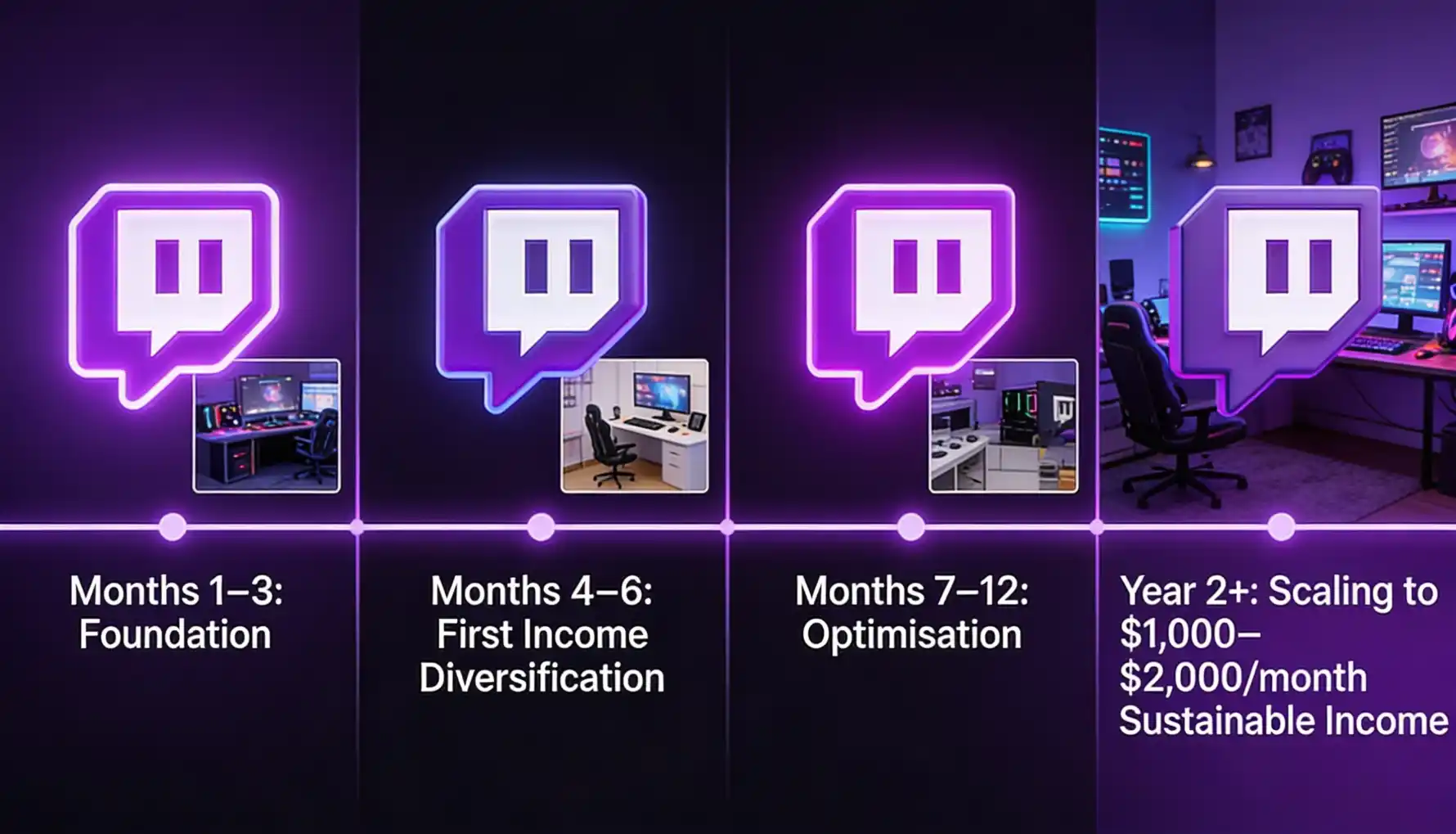
Build the Base Right
Goal: Reach Affiliate and build 10–30 average viewers.
- Choose strategic niche game with passionate but less competitive community
- Establish consistent 3–4x weekly streaming schedule
- Invest in basic quality equipment (mic, camera, lighting)
- Build out TikTok and YouTube presence for discovery
- Stream for community and engagement, not revenue
- Work toward Affiliate status requirements
Add External Revenue Streams
Goal: First $100/month from all sources combined.
- Apply on sponsorship platforms (Gamesight, Matchmade, PowerSpike)
- Configure affiliate links (Amazon, gaming gear you use)
- Create YouTube channel for stream highlights
- Start repurposing content for TikTok and Shorts
- Create Discord community
- Begin direct sponsor outreach efforts
Scale What Works
Goal: $500/month from multiple sources.
- Double down on content types and games that perform
- Repurpose content more aggressively (5+ pieces per stream)
- Active monthly sponsorship pitching
- Launch Patreon or premium Discord tier
- Offer coaching if you have sufficient expertise
- Network and collaborate with other streamers
Build Toward Sustainable Income
Goal: $1,000–$2,000/month sustainable income.
- Aim for Partner status (if applicable to your growth path)
- Negotiate better deals with sponsors
- Grow YouTube and TikTok channels strategically
- Consider merchandise if audience supports it
- Build long-term sponsor relationships
- Consider hiring an editor to scale content repurposing
FAQ: How to Earn Money on Twitch
Final Words: Streaming Is Building, Not Broadcasting
Alex, the streamer who went from making $0.16/hour to $1,440–$2,000/month? Six months after our conversation, he had completely transformed his approach to streaming and income.
His current strategy: streaming 3–4 nights per week (down from 5, but higher quality), a niche game with a passionate community (top 5 streamer for that game), each stream producing 5–7 pieces of content for TikTok and YouTube, 2–3 rotating monthly brand deals, active affiliate promotion for gear he genuinely uses, YouTube passive income from stream highlights, and a premium Discord tier for exclusive access.
What he discovered: "I thought streaming was just broadcasting yourself playing games. It's really about building a community and leveraging that community across different platforms and revenue streams. Twitch is the heart — but the revenue is everywhere."
The platform is monetised, but it's not the main income source for most successful streamers. Twitch gives you community building, live engagement, audience ownership, and a content creation engine. Real income comes from brand deals and sponsors, multi-platform presence, content repurposing, and multiple stacked revenue streams. The moneymaking streamers treat streaming like a business, build 5–10 income streams, establish TikTok and YouTube for discovery, choose strategic niches over popular games, convert every stream into multiple content pieces, and play the long game — 2–4 years minimum.
Don't expect quick money from subscriptions. Don't play oversaturated games hoping to get lucky. Don't make Twitch your only platform. Start building multiple income streams from month one. Get your content everywhere. Start thinking in years, not months. Your Twitch income isn't in a subscriber count. It's in building a community over time and monetising that community strategically across multiple revenue streams. Stream with purpose. Build patiently. Monetise smartly. Income follows the audience and the strategy — not just the hours of broadcasting. Go build something worth subscribing to. And monetise it everywhere.
Alex's Final Results: What a Real Twitch Strategy Produces
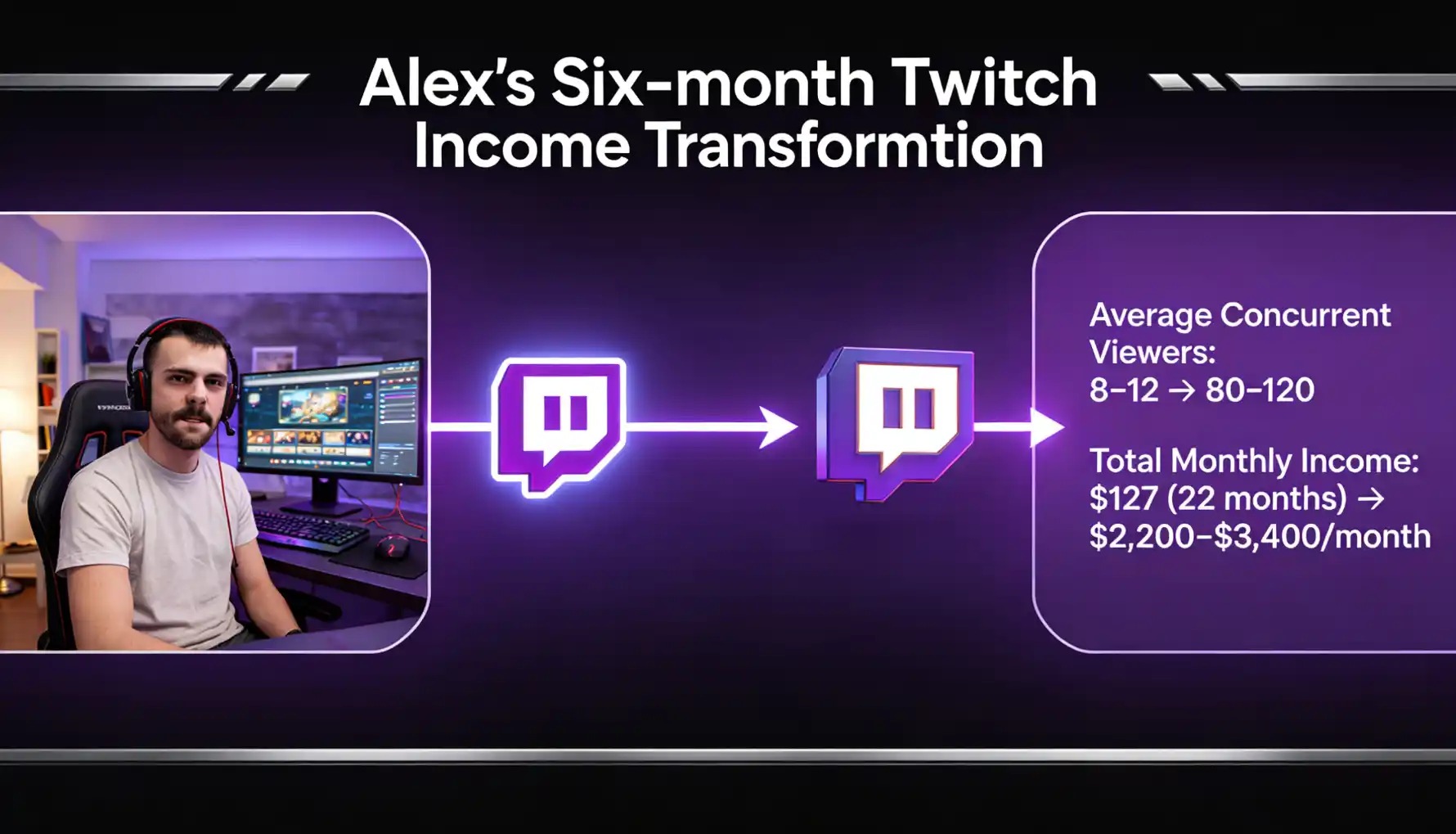
Six months later, Alex's results: average viewers 80–120 (up from 8–12), combined monthly income of $2,200–$3,400. Breakdown: Twitch direct (subs, bits, ads) $600–900, sponsors $800–$1,200, YouTube $200–$350, affiliates $300–$500, Discord and coaching $300–$450.
Same streamer. Same niche. Same hours worked. A completely different understanding of what Twitch money actually looks like — and where it actually comes from. Your Twitch revenue formula: discover your niche, build regularly, be yourself (community always beats numbers), repurpose everything, spread income across Twitch and YouTube and sponsors and affiliates, build off-platform, and be patient. 2+ years to meaningful income is the norm — and it's absolutely worth it for those who build it right.
🎮 Ready to Build the Twitch Audience That Makes Monetisation Real?
GTR Socials helps streamers break through the "0 viewer" cold start barrier — giving quality streams the initial viewership that sparks organic discovery. Real Twitch views and followers, real initial momentum.
Comments (0)