

Maya's polished, well-produced fitness videos averaged 400–890 views for six months. Her "ugly," unedited, terrible-lighting raw video hit 2.3 million views in 48 hours. The TikTok algorithm doesn't reward what you think it rewards — and once you understand that, everything changes.
Last month I saw a fitness creator called Maya absolutely crack the TikTok algorithm after months of frustration.
She'd been posting workout videos regularly for six months — well produced, good lighting, helpful tips. But her videos suffered the same discouraging cycle: Video 1: 347 views, 12 likes. Video 2: 523 views, 19 likes. Video 3: 891 views, 31 likes. Video 4: 412 views, 15 likes. Rinse. Repeat. Hundreds of views, never breaking into the thousands and millions she saw other creators reach. She was ready to quit.
Then she tried something completely different. She stopped posting "quality" workout demos and began posting what she called "ugly content" — raw, unedited videos shot on her phone with terrible lighting, starting mid-sentence, no fancy transitions. Just fast delivery of pure value. Her caption read: "Your form is wrong and it's killing your gains. Here's why—"
❌ "Professional" Videos — 6 Months
✅ One "Ugly" Raw Video
"I don't get it," she said, genuinely bewildered. "My 'bad' video with zero production value destroyed my professional content by 10,000x. What is this algorithm actually rewarding?"
I had to tell her what most TikTok guides bury in jargon: "TikTok's algorithm doesn't care about production quality, posting times, or how many followers you have. It cares about one thing: can this video hold someone's attention from start to finish? Your 'ugly' video did that. Your 'professional' videos didn't."
TikTok is a ruthlessly meritocratic algorithm unlike any other platform. Your follower count is worth almost nothing. Previous viral videos don't help your next one. Every video is evaluated individually on whether it can hold attention and drive engagement. A creator with 0 followers can outperform a creator with 2 million — if their video is more engaging. That's terrifying and liberating at the same time.
How TikTok's Algorithm Works Basically
Before tactics, understand the fundamental mechanics — because most creators are operating on completely wrong assumptions.
The For You Page: TikTok's Recommendation Engine
Unlike other platforms where Instagram mostly shows people you follow and Twitter shows your followed accounts with some recommendations, TikTok's For You Page (FYP) shows mostly accounts you DON'T follow (70–90%). It's a personalised recommendation feed that changes from video to video based on your behaviour — and every FYP is different for every person.
Why this matters for creators: you don't need followers to succeed. If the content performs well, the algorithm will show your content to potentially millions of people who have never heard of you.
The Testing Phase: How TikTok Evaluates Every Video
Test Group
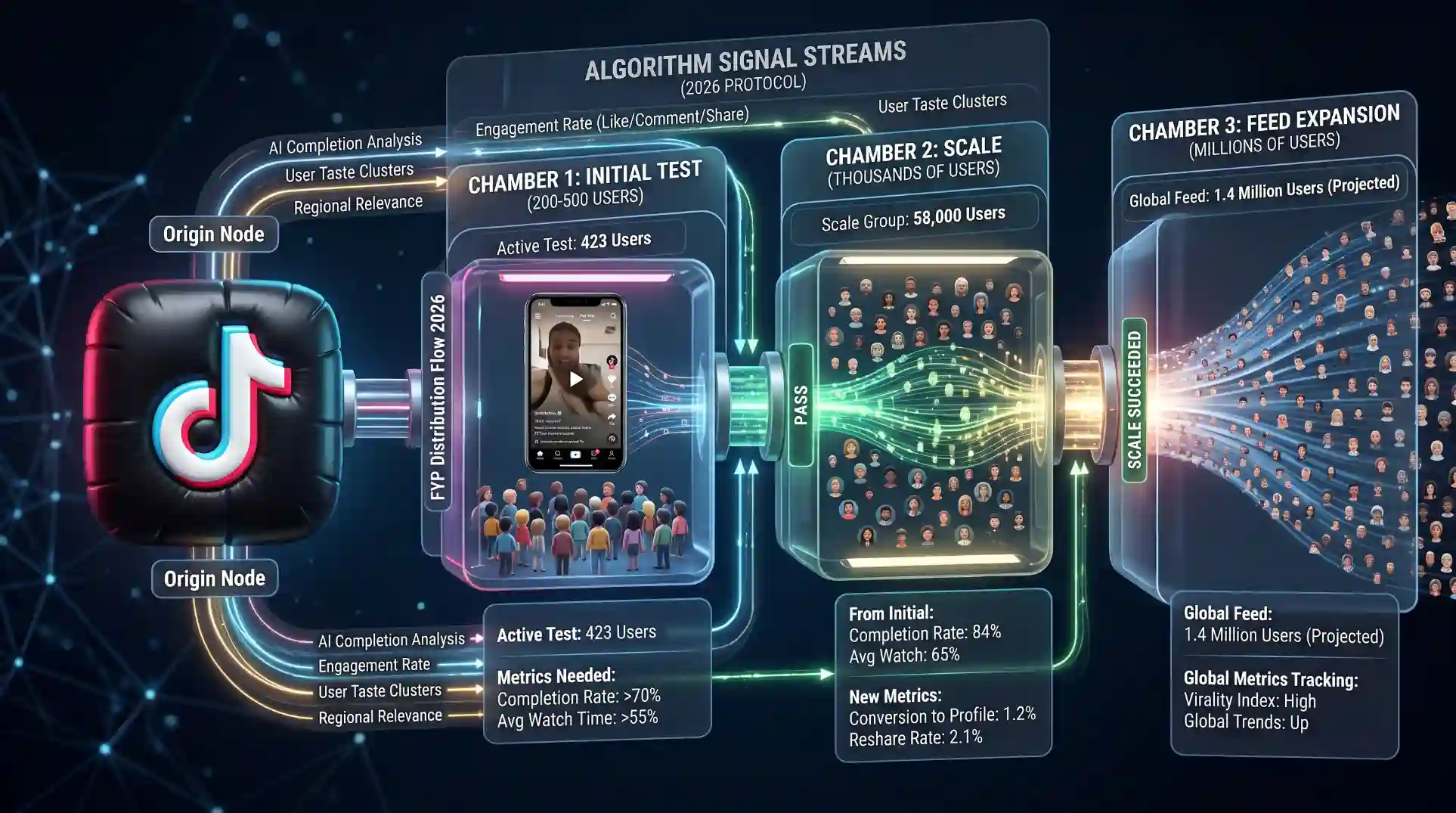
TikTok shows your video to 200–500 people — a mix of followers and non-followers, matched by video characteristics (sounds, hashtags, on-screen text analysis)
Performance Evaluation
First 1–2 hours. Algorithm tracks completion rate, engagement signals, and negative feedback (hides, reports, "not interested" taps)
Distribution Decision
Strong performance → shown to 2,000–5,000. Weak performance → distribution stops. Process repeats at each level
Potential Virality
If performance stays strong, expansion continues: 10K → 50K → 250K → 1M+. Can happen hours or weeks after posting
The Personalisation Engine
TikTok's algorithm learns what each individual user likes by tracking videos they've finished, rewatched, liked, commented on, shared, or hidden — plus accounts they follow, time spent per video, and how fast they scroll. It then shows more content they interacted with, videos from similar accounts, content using the same sounds, and topics they've shown interest in.
For creators, this means the algorithm sorts you and helps you find your audience. Know your niche and create consistent content so the algorithm can accurately categorise who to show your videos to.
The Ranking Signals: What Actually Counts for Views
Here's exactly what TikTok's algorithm is measuring — and how much each signal matters.
Completion Rate
Most ImportantThe percentage of viewers who watched your entire video. A 15-second video watched for 12 seconds = 80% completion (good). A 60-second video watched for 20 seconds = 33% (poor). Algorithm rewards high completion rates massively. Maya's polished videos got 30–40% completion. Her raw video got 85% — and people rewatched it.
Rewatches
Very High WeightPeople watching your video multiple times. The most powerful engagement signal — it shows extremely interesting content, artificially multiplies your view count, and is algorithmic gold. Content that gets rewatched: fast-paced complex information, oddly satisfying processes, layered humour, how-to references, and exceptional skill demonstrations.
Engagement Rate
High WeightHierarchy matters: Shares (most powerful — indicates worth spreading), Comments (very high — discussion signal), Saves (high — worth checking later), Likes (moderate — basic approval signal), Follows from video (high — want more from creator). Design content specifically to generate these signals, not just passive viewing.
Watch Time
High WeightTotal time people spent watching (different from completion rate). A 30-second video watched in full = 30 seconds watch time. Longer videos can produce more total watch time IF completion stays high. Short video + high completion = good. Long video + high completion = very good. Long video + low completion = worse than short video.
Negative Feedback
Huge Negative Weight"Not Interested" taps, hides, reports, and fast scrolls (watch time under 1 second) are direct signals that content didn't land. Too many negative signals = distribution severely limited. Caused by clickbait that fails to deliver, fake hooks, wrong audience targeting. Honour your hook's promise every time.
Video Information
Medium WeightOn-screen text (OCR analysis), captions with keywords, sound choice (trending audio gets an algorithmic push), hashtags (3–5 relevant ones for classification), and trending effects. TikTok reads everything in and around your video to understand its topic and find the right audiences.
Account history has low-to-moderate weight. Regular posting shows an active creator. Previous violations hurt distribution. But follower count barely helps your initial distribution, previous viral videos don't carry over, and verified status aids credibility but not the algorithm. TikTok is more meritocratic than any other platform — great content beats a large account with mediocre content, and new accounts beat old accounts with better videos.
Content Strategies That Break the Algorithm
Understanding the signals is one thing. Creating content that systematically triggers them is the actual work.
Strategy 1: The 1-Second Hook Rule
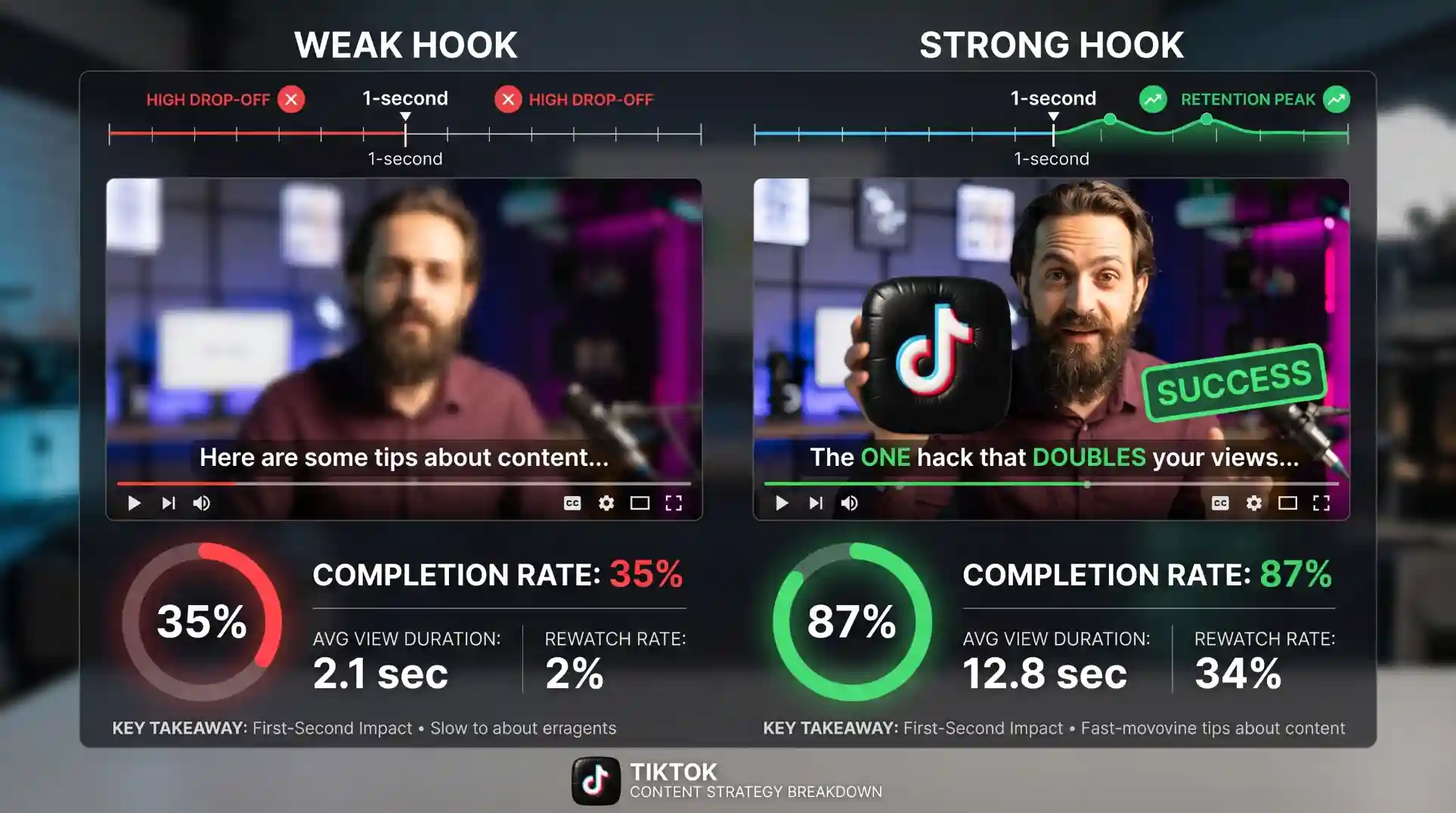
Everything is decided in your first second. Weak hooks include "Hey guys! Welcome to my channel," slow fade-ins, three seconds of text to read, and gradual build-ups. Powerful hooks begin in the middle of the action, open with a bold statement or provocative question, use a pattern interrupt, or deliver a value proposition immediately.
The test: if you can scroll away in the first second and not miss anything of value, your hook is weak.
Strategy 2: Optimise for Your Specific Goal
- Entertainment (comedy, pranks, skits): Goal is high completion, rewatches, and shares. Max length 7–20 seconds. Strategy: punchline at the end forces completion.
- Educational (tips, tutorials, how-tos): Goal is high saves, shares, and completion. Length 15–45 seconds. Strategy: dense value, clear structure.
- Storytelling (narrative, personal experience): Goal is high completion and comments. Duration 30–60 seconds is fine. Strategy: hook at the beginning, clear story arc.
- Challenges and trending content: Goal is high engagement and profile visits. Match the trend's typical format length. Strategy: add your unique personal touch.
Strategy 3: Trending Audio Strategy
Trending audio gives an algorithmic lift (TikTok pushes trends), makes classification easier, and rides trend momentum. Original audio can work and if it goes viral you own the sound, driving traffic from everyone else who uses it. The intelligent approach: use trending audio for 60–70% of content, 30–40% original audio. Choose trending audio that actually fits your content — don't force it. Most importantly: get on trends early (first 24–48 hours). The algorithmic benefit of trending audio declines significantly as the trend peaks.
Strategy 4: Niche Consistency
Clear niches pay off on TikTok because the algorithm can categorise you easily and show your content to interested audiences, building a common-interest audience over time. The rule: 80% core niche content, 20% experimental or variety. Too broad: "fitness tips." Niche: "calisthenics for absolute beginners over 40." The specificity helps the algorithm match you with precisely the right audience.
Strategy 5: The Reply Video Strategy
When someone comments on your video, reply with a video response to their comment. TikTok notifies them, and these reply videos often perform very well algorithmically — they show active community engagement, answer questions other viewers also have, create a dialogue cycle, and get a specific algorithmic push for creator-community interaction. Use high-engagement comments as prompts for new content.
Strategy 6: Posting Frequency
Research shows most creators should post 1–3 videos per day. More posting means more chances for a viral video, signals an active account to the algorithm, and generates faster data on what works. The trade-off: don't post so much that quality declines. One great video a day beats three average ones. Find a sustainable pace you can maintain for months, not just weeks.
The First Video Phenomenon
Many creators don't realise what a significant opportunity new accounts actually represent — and how easily it's wasted.
Why First Videos Perform Well
TikTok gives new creators a "chance" by showing their first few videos to a wider audience than established accounts might receive. It's testing your ability to create engaging content and rewarding high-quality early content. The pattern many creators see: first video 10,000–50,000 views, second video 15,000–100,000 views, third video 2,000 views, fourth video 500 views.
What's happening: TikTok tested your content. The early videos performed okay and got shown to more people. Later videos didn't perform well and distribution stopped. The algorithm is constantly testing, not giving you permanent elevated status.
How to Use This Strategically
If you're starting a new account: don't waste your first video on throwaway content. Prepare your best content carefully. Plan the first 5–10 videos. Make them high-quality, compelling, and hook-focused.
First video checklist: powerful 1-second hook, high completion potential, clear niche, strong production quality (not Hollywood — but clear audio, steady camera), interesting caption, and a related trending sound.
The algorithm still processes each video individually — you can absolutely recover with genuinely great content. It just makes the early climb harder without the new-account boost. Many large creators built their audiences after a slow start by improving their content quality. The boost helps; it's not required.
Common Mistakes That Kill Reach
These are the patterns that silently prevent TikTok accounts from breaking through — and the specific fixes for each.
Posting videos with TikTok, Instagram, or YouTube watermarks. TikTok aggressively suppresses cross-posted content and looks specifically for original content. Algorithm identifies and limits distribution of recycled content.
Blurry, pixelated, poorly lit, or low-resolution videos. People scroll straight past content that doesn't look watchable. Poor quality correlates with low engagement, which the algorithm reads as a quality signal.
Taking 3–5 seconds to get to the point. People scroll before you've delivered any value. This creates a poor completion rate that the algorithm flags immediately.
Getting discouraged when videos "only" get 5,000 views. Viral is the exception, not the rule. Most creators have a mix of average, good, and occasional viral videos. Inconsistency from discouragement breaks the algorithm's learning about your content.
Removing underperforming videos immediately. Videos can go viral days or weeks after posting. The algorithm keeps testing old content. Deleting kills that opportunity permanently and doesn't help your other videos.
Purchasing fake views, likes, or followers. TikTok detects fake engagement patterns — views from bots don't trigger further distribution. Your engagement rate gets destroyed. Can lead to a shadowban. Money wasted.
Not checking what content actually performs. There are always patterns in what works. Continuing to produce content that doesn't connect without understanding why is the most fixable mistake on this list.
What Is a Shadowban and How to Avoid It
Let's address the most feared TikTok phenomenon — what it actually is, what causes it, and how to fix it.
What Shadowbans Actually Are
A shadowban is a severe, unannounced restriction on your content's distribution without notification. Detection signs: a sudden drop in views (hundreds instead of thousands), videos not showing up in hashtag searches, zero For You Page views, and content only visible to existing followers. These are all signs the algorithm has significantly limited your reach.
What Triggers Shadowbans
- Community Standards violations (nudity, hate speech, violence)
- Follow/unfollow tactics and other spam behaviour
- Copyrighted content (music or videos you don't have rights to)
- Mass reports from users
- Uploading the same video repeatedly
- Too many hashtags or using banned hashtags
How to Fix a Shadowban
Let the ban period end and give the algorithm time to reset. Continuing to post during an active shadowban can extend the restriction.
Delete videos that may have triggered the restriction. Watch for copyright issues and remove any spam-like behaviour from your account activity.
Original creator content only. No violations. High engagement potential. Show the algorithm you're a legitimate creator with quality content.
Recovery typically takes 7–14 days. Keep posting quality material consistently. The restriction lifts as your account demonstrates clean behaviour.
Strictly follow Community Guidelines at all times. No automation or bots. Generate only original content. No spam behaviour. Never purchase engagement. These aren't just rules — they're the foundation of everything that actually works on TikTok long-term.
The GTR Socials Perspective: TikTok Is Different
At GTR Socials, we work cross-platform and are transparent about where our services fit and where they don't.
Here's our honest take on TikTok: it's the most meritocratic algorithm of all the major social platforms. On Instagram or Twitter, follower count matters significantly. On TikTok, every video is judged on its own merits — purely on whether it keeps people watching and interacting. Traditional growth services don't work as well on TikTok as they do on other platforms precisely because of this.
Each video is judged separately. Follower count barely matters. The algorithm easily detects fake engagement. Views from bots and fake accounts don't cause further distribution — they actively hurt your engagement rate. Quality content is the only thing that reliably works. You cannot trick a system this sophisticated into distributing bad content.
Where growth support can genuinely help: even great content can struggle to get initial traction on new accounts. New accounts need time to build up algorithmic trust. The cold start problem exists (though it's less severe on TikTok than on other platforms). Our TikTok views and TikTok likes services use real TikTok users to help signal that quality content should be distributed further — giving good content a head start it deserves.
Support will not make bad content go viral. It can't trick TikTok's algorithm — it's too sophisticated. Effectiveness depends entirely on the quality of the underlying content. It's most useful for accounts with genuinely good content that aren't getting a fair initial shot. Poor hooks can't be saved. Low completion rates can't be fixed. This is an accelerator for quality content, not a substitute for it.
First: Master content creation — hooks, completion rate optimisation, value delivery. Second: Post regularly (1–3 videos/day), test and learn relentlessly. Third: Analyse what works and double down on winning formats. Fourth: Optimise based on watch time and completion rate data from your analytics. Then, and only then: Consider support if quality content is genuinely not gaining initial traction. This sequence exists because TikTok's algorithm will discover and surface great content. The issue with content that doesn't perform is usually content quality, not a lack of initial push.
Your TikTok Algorithm Action Plan
A structured, month-by-month system for building genuine TikTok reach from scratch or breaking through a plateau.
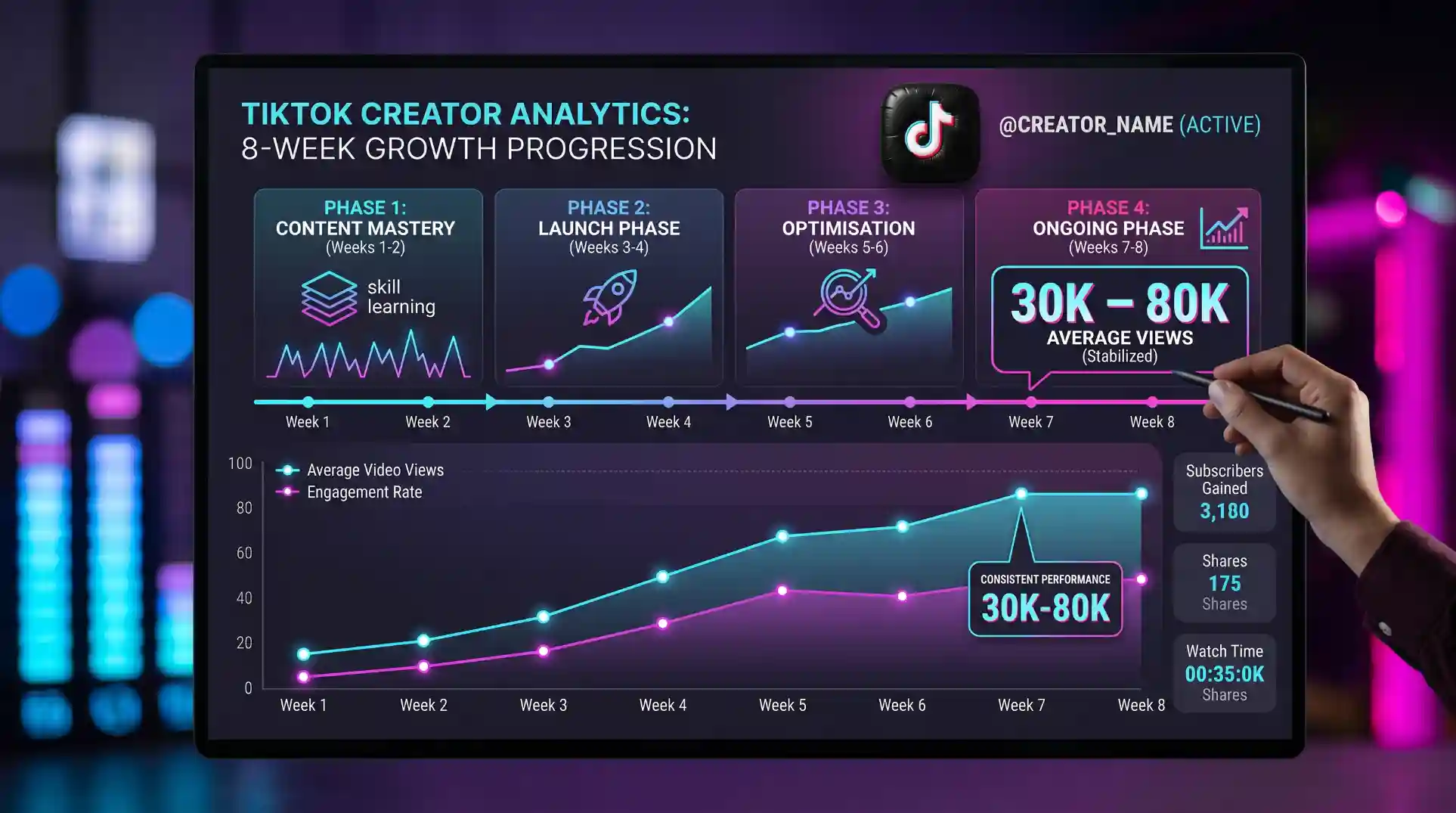
Learn Before You Launch
Study and practice before posting anything public.
- Learn from top performers in your specific niche
- Identify common hooks and formats that get high completion
- Practice 1-second hooks until they feel natural
- Create 10 practice videos (not to post yet)
- Identify which practice videos feel most engaging
Post, Test, and Observe
Build your content testing process and gather real data.
- Post 1–2 videos every day consistently
- Vary your hooks and formats deliberately
- Track completion rate in TikTok Analytics closely
- Identify which content types perform best
- Document patterns you observe across posts
Double Down on What Works
Use real data to refine your content strategy.
- Double down on high completion rate formats exclusively
- Eliminate content types with poor completion history
- Refine hooks specifically based on your data
- Test trending sounds strategically when they fit
- Maintain consistency — don't break your posting rhythm
Stay Current, Stay Consistent
Build the long-term TikTok presence that compounds over months.
- Watch for algorithmic changes and platform priority shifts
- Stay up-to-date with emerging trends in your niche
- Post 1–3 times per day consistently
- Review performance data weekly without fail
- Adjust to what is working — never stop testing
TikTok Algorithm: FAQ
Final Thoughts: The Algorithm Pays Attention
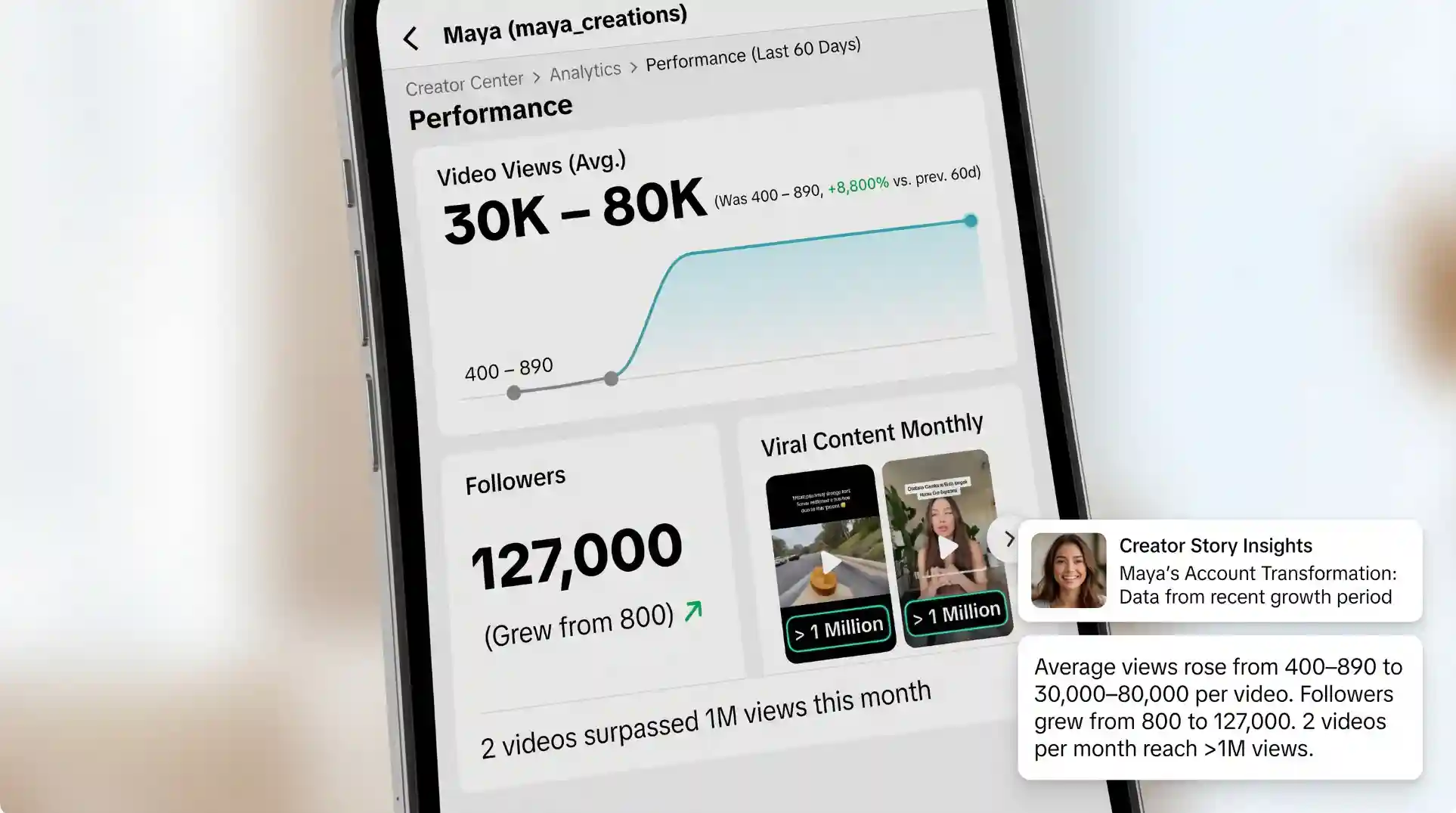
Maya, the fitness creator who cracked the algorithm with "ugly" content? Three months later she had fully cracked the formula. Not every video went viral — but her average views went from 400 to 45,000. Her followers went from 800 to 127,000.
What changed: "I stopped trying to impress people with production quality and started trying to keep their attention. The algorithm rewards attention, not perfection." Her current approach: first-frame hook with no exceptions, every extra second trimmed, fast delivery of value, reward at the end, posting twice a day, trending audio when it fits naturally. Her results: average 30K–80K views per video, 1–2 videos hitting 1M+ per month, sustainable audience growth, and regular brand partnerships.
Same person. Same niche. Completely different understanding of what TikTok's algorithm actually wants.
There are no hacks or shortcuts to "beat" it. You beat it by figuring out what it's optimising for and creating content that delivers exactly that. TikTok's algorithm optimises for: engagement (completion rate), content people want to rewatch, content that sparks sharing and commenting, content that keeps users on the platform (watch time), and content that's truthful to its subject matter (no clickbait).
The TikTokers who succeed long-term: master the 1-second hook without exception, ruthlessly optimise for completion rate, create content worth watching all the way through, post consistently (1–3x per day), study what works and do more of it, focus on quality of engagement over follower quantity, treat each video as independent of previous performance, and stick it out during the learning curve.
Stop searching for algorithm hacks. Stop worrying about your follower count. Stop creating "perfect" content that people scroll past. Start creating content people actually want to watch all the way through. The rest is up to the algorithm. Your viral video isn't waiting in a hack or a trick. It's waiting in your next genuinely interesting piece of content. Go make something worth watching. The algorithm is primed to reward it.
🎵 Ready to Give Your Best TikTok Content the Initial Push It Deserves?
GTR Socials helps creators overcome the cold start problem — giving quality content the early engagement signals that trigger TikTok's algorithmic distribution. Real views, real likes, real initial momentum.
Comments (0)