

Sarah had 3,200 followers, 2.5% engagement, and zero Instagram sales after eight months of posting. Six weeks after understanding how the algorithm actually works: 8–12% engagement, 600–900 story views, and direct sales. Same followers. Same products. Completely different results.
Three weeks ago, I met with a small business owner, Sarah, who was ready to drop Instagram completely.
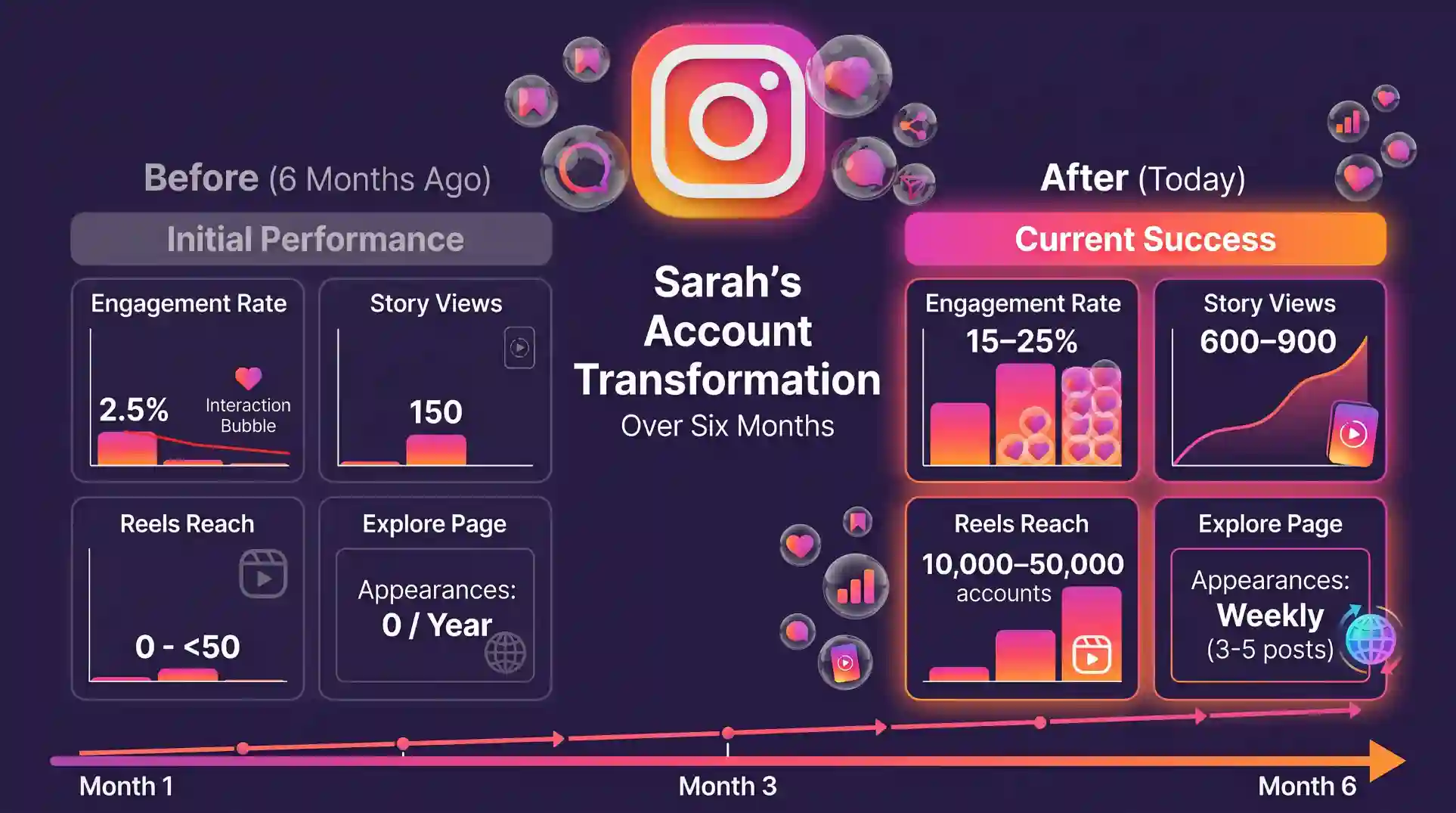
She'd been posting regularly for eight months: lovely product shots, thoughtful captions, regular Stories. She had gone from 400 to 3,200 followers. It looked like progress from the outside. But that was her reality: 40–80 likes per post (engagement rate 2.5%, declining), Stories viewed by 150 people (5% of followers), no sales from Instagram in three months, and 2 hours a day creating content that apparently went into the void.
"I don't understand the algorithm," she said, frustrated. "I post at the 'best times,' I use 30 hashtags, I engage with other accounts. But my reach keeps dropping. It feels like Instagram is penalizing me for trying to grow organically."
I had to say something that would totally flip her approach: "Instagram isn't punishing you. You're simply optimizing for the wrong signals. The algorithm doesn't care about the number of hashtags you use, the time you post, or how much you interact with random accounts. It cares about whether your specific followers actually want to see your content — and right now, your content isn't giving that signal."
❌ Before — Wrong Strategy
✅ After — Algorithm-Aligned
It's not a shady black box working to suppress your reach. It's a recommendation engine built for engagement. If you know what signals it's looking for, you can work with it instead of against it. This guide covers the Feed, Stories, Reels, and Explore algorithms — what ranking signals determine visibility, why your reach might be declining, and content strategies that align with algorithmic priorities.
The Basic Functioning of Instagram's Algorithm
Before getting into specific signals, understand the fundamental premise — because most people get this wrong from the start.
Instagram Doesn't Have "An Algorithm" — It Has Many
Different algorithms operate for different surfaces. The Feed algorithm decides which posts appear in your main feed, showing content from accounts you interact with most and predicting your interests. The Stories algorithm determines who shows up first in your Stories tray based on interaction history. The Reels algorithm focuses on discovery — showing content from accounts you don't follow, prioritising entertainment value, and being the most aggressive at pushing content to new audiences. The Explore algorithm provides personalised discovery, showing content from accounts you don't follow based on your engagement patterns.
They work on different principles — which is why the same content can perform very differently across surfaces.
The Core Concept: Predicting Your Engagement
Instagram's mission: present users with content they will interact with, to keep them on the platform as long as possible. When you open Instagram, the algorithm predicts which posts, Reels, and Stories you'll be most interested in — shows you those first — learns from your actions (or inactions) — and adjusts future predictions accordingly.
What counts as "engagement": likes (basic signal), comments (strong signal), saves (strong signal — indicates the content is valuable), shares (strong signal — increases reach), view time (critical for Reels), profile visits, and direct messages about a post. The algorithm is constantly trying to answer: "Would this particular user engage with this particular piece of content?"
Instagram's Feed hasn't been fully chronological since 2016. Recency still matters — newer posts are ranked higher than old ones — but engagement prediction outweighs pure recency. Don't obsess over posting at the "best" times. A great piece of content from 6 hours ago will always outperform mediocre content from 6 minutes ago.
Feed Algorithm: How Your Posts Are Distributed (Or Not)
Here's what actually affects visibility in the Feed — ranked by weight.
Relationship
Maximum WeightInstagram tracks how often you interact with an account, check their profile, DM them, search for them, or engage with their content. Your most engaged followers see your posts more frequently and sooner. Followers who never engage rarely see your content even if they follow you. This is why "engagement pods" stopped working — fake engagement can't substitute for genuine interest.
Interest
Very High WeightInstagram predicts "will this post engage this user based on what they've liked before?" considering content topics you've engaged with, posts you've liked or saved, similar accounts you follow, and browsing behaviour. Niche content outperforms random diversity. The algorithm "knows" what your content is about and shows it to interested users.
Recency
High WeightFresh content gets pushed first for engagement testing. If engagement is high, distribution grows. If engagement is low, the post dies quickly. Posts older than 24 hours rarely appear in Feed unless someone visits your profile directly. Post regularly to stay in the algorithm's new content rotation.
Post Engagement Rate
High WeightThe first 30–60 minutes are critical. Your post is shown to 10–20% of followers first. The algorithm tracks engagement: high engagement = shown to more followers; weak engagement = minimal distribution. Multiple engagement types (like + comment + save) are especially powerful signals.
Content Type
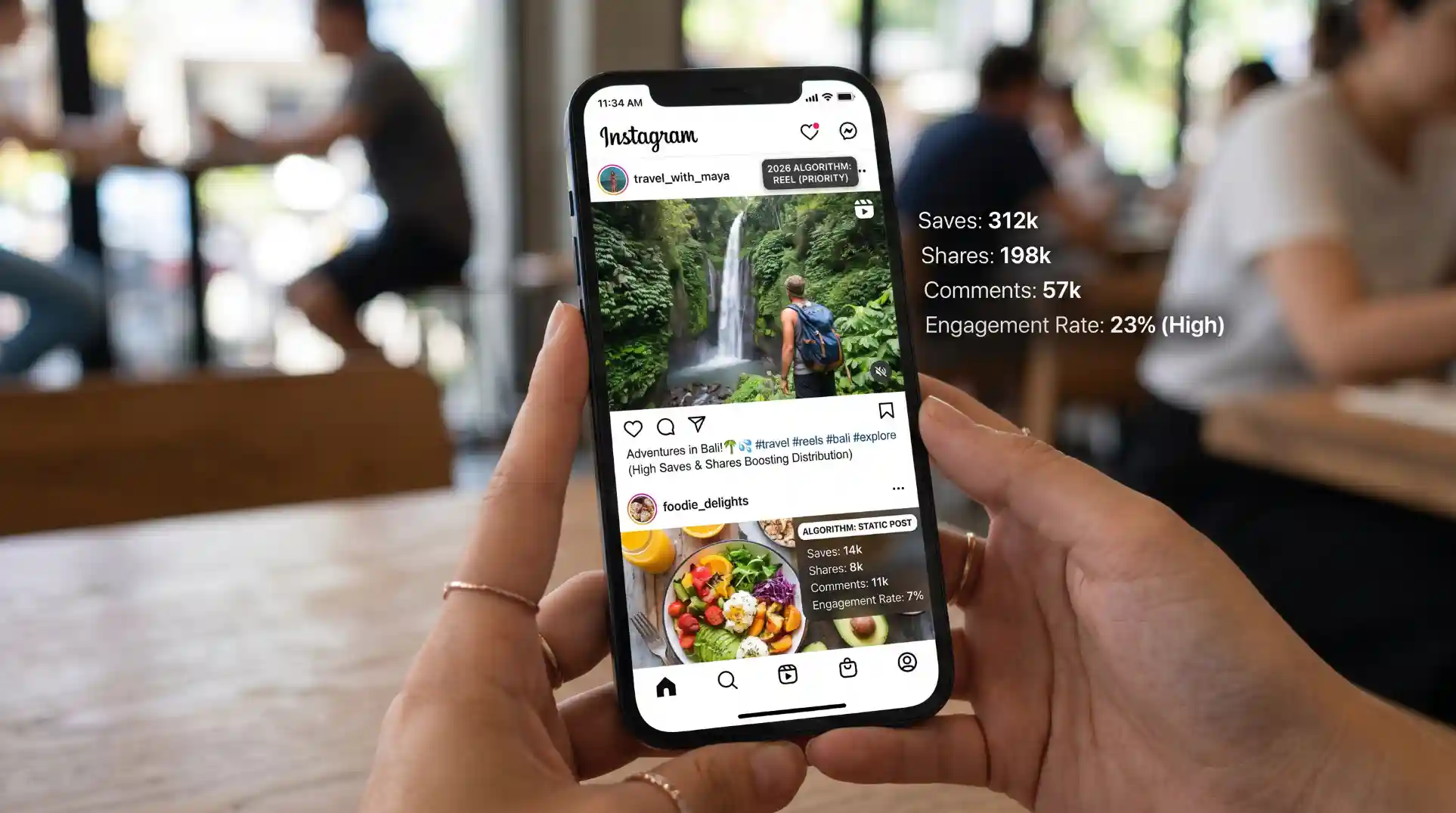
High Weight2026 priority order: Reels (very high — pushed to non-followers), Carousels (high — multiple images = more time on post, swipe activity signals engagement), Single images (default — still viable but less reach), Feed videos (medium — not as prioritised as Reels).
User Behaviour Patterns
Medium WeightPeople who follow 1,000+ accounts see less of your content due to feed competition. Occasional app-openers only see your absolute best posts. Active daily users see your content more consistently. This helps set realistic expectations — not all followers have equal visibility of your posts.
Stories Algorithm: Why Some Stories Always Show Up First
Stories operate on different principles than the Feed — understanding this changes how you approach them.
How Stories Are Organised
Stories are not chronological. They're sorted by watch history (Stories you watch completely = accounts appear first; Stories you skip = move to the back), account engagement (DMs, searches, content interaction — mirroring Feed relationship signals), and recency (latest Stories prioritised, but relationship still beats pure timing).
Why Your Stories Have Low Views
Your followers don't consistently watch your Stories. The algorithm learns from skips and sends you to the back of their tray. They never scroll far enough to find you. Low completion rate. People start watching but don't finish — the algorithm learns your Stories aren't interesting and stops showing them early. Low-effort, generic Stories. No polls, questions, or engagement stickers. Not worth completing.
Strategies That Work for Stories
- Engagement stickers: Polls, questions, quizzes, emoji sliders. Interactive stories signal quality to Instagram and improve your position in followers' trays.
- Regular posting: Daily Stories = algorithm treats you as active. Followers get used to seeing you. Sporadic posting = algorithm deprioritises you.
- Strong first frame: First Story determines whether someone watches the rest. Hook them immediately. High completion rate = algorithmic uplift.
- Reply-generating content: Stories that trigger DMs are a powerful engagement signal. Improves overall account relationship score and affects Feed visibility too.
Reels Algorithm — The Discovery Machine
Reels work on completely different principles to Feed or Stories — and understanding this is where most creators unlock their biggest reach gains.
Discovery-First Algorithm
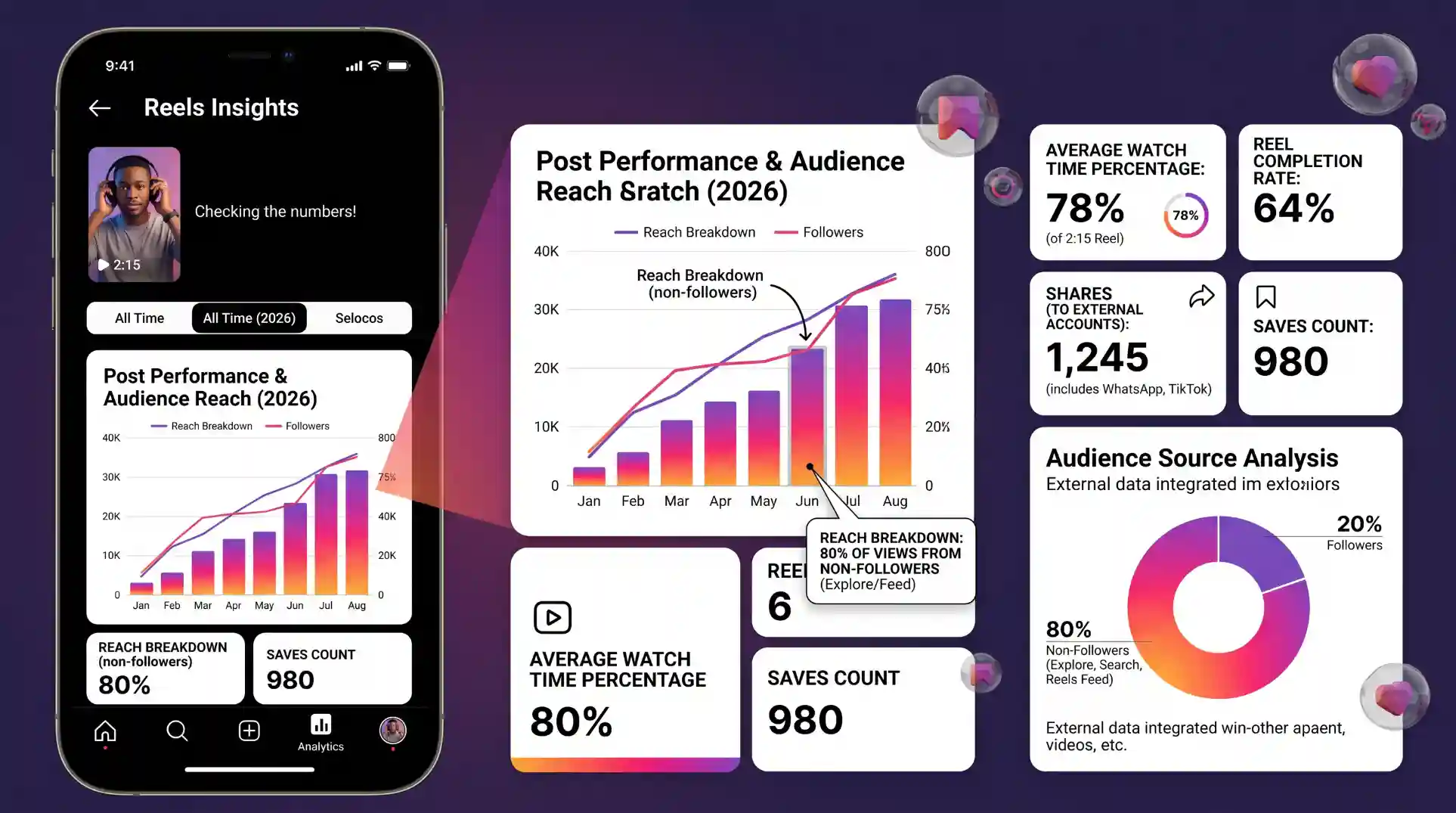
Unlike Feed (which primarily shows content from accounts you follow), the Reels algorithm mostly shows you accounts you DON'T follow. Instagram is competing with TikTok, driving discovery and entertainment, and wants users watching Reels for hours. This means Reels have the highest potential to reach entirely new audiences of any content type on Instagram.
Ranking Signals for Reels
- Watch time and completion rate (most important): Are people watching your Reel all the way through? Do they watch again? The algorithm strongly prioritises videos people watch from start to finish.
- Engagement: Likes, comments, saves, and shares — with shares being extremely powerful as they indicate content worth spreading beyond Instagram.
- Audio: Trending audio gets an algorithmic push. The audio you pick significantly impacts your reach potential.
- Quality: High resolution, non-watermarked from other platforms, original and engaging content. TikTok watermarks = algorithmic suppression.
- Relationship: Less important than Feed. You can reach millions who don't follow you, but your followers are still likely to see it.
Why Do Your Reels Die at 200 Views?
- Weak retention: People scroll away in the first 1–3 seconds. Algorithm sees low engagement and cuts distribution. The hook is everything.
- Watermarked or recycled content: TikTok watermarks trigger algorithm suppression. Instagram explicitly penalises recycled content from other platforms.
- Static slideshow files: Music over static images has no action or movement. It's boring compared to real video.
- No trending elements: Skipping trending audio and trending formats. Algorithm favours content that joins current conversations.
Hook in the first 1 second: Pattern interrupt, movement, curiosity-triggering question or surprising statement. Use trending audio strategically: Not required for every Reel, but increases reach potential when contextually appropriate. Optimise for completion: 7–15 second Reels have very high completion rates. Longer is fine if compelling throughout. Cut every second of dead time. Encourage saves and shares: Tutorial content drives saves; relatable content drives shares. These signals extend reach substantially more than likes.
Explore Algorithm: How to Be Found by New Audiences
Explore is your passport to audiences who have never heard of you — but it requires earning your way in.
How Explore Works
Explore is entirely personalised for each user based on their activity history. Instagram examines your interactions, finds similar content, ranks by interest prediction, and shows the best recommendations. There's no direct way to "submit" to Explore — you earn placement by performing well with your existing audience first.
What Gets You Into Explore
- Strong engagement from current followers: High engagement signals quality. Algorithm tests content in Explore. Non-follower interaction confirms the signal.
- Niche consistency: Easily classified by algorithm, displayed to users interested in that niche. Random content is much less likely to match with relevant audiences.
- Saves and Shares: Explore's strongest signals — they indicate content worth discovering. Prioritised over likes by a significant margin.
- Hashtag performance: Performing well in hashtag feeds signals topic relevance. Helps algorithm classify and distribute your content accurately.
Why You're Not in Explore
- Poor engagement rate: If your followers aren't engaging, why would strangers? Algorithm won't risk showing weak-performing content to new audiences.
- Unclear niche: Algorithm can't categorise you and doesn't know who to show your content to.
- Small, unengaged following: Need baseline engagement to signal quality. Hard to get into Explore with fewer than 1,000 genuinely engaged followers.
- Community guideline violations: Even minor breaches trigger distribution limits that affect Explore eligibility.
Why Your Reach Is Decreasing (And How to Fix It)
Sarah isn't alone. Here's a systematic diagnosis of the most common reach problems — and the specific fixes for each.
Passive content that's nice to look at but gives followers nothing to do. Signs: lots of likes, few comments or saves, people keeping on scrolling, declining engagement rates.
Three posts one week, two weeks of silence, five posts the next week. The algorithm favours active accounts. Followers forget about you. No consistent Feed presence means no algorithmic momentum.
Only posting photos in 2026. Instagram prioritises Reels. Photos get a fraction of Reels' reach. No Reels = no algorithmic edge for discovery.
Many followers who don't engage — bought followers, follow/unfollow victims, inactive accounts. Posts are shown to these followers first. They don't engage. Algorithm reads low engagement and restricts distribution.
30 unrelated hashtags or using banned hashtags. Instagram may flag this as spam, reducing reach. Banned hashtags actively slash distribution.
Violated Instagram's community guidelines or terms of service. Reach severely restricted. Posts not appearing in hashtag feeds.
Algorithm-Friendly Content Strategies
These are the specific content approaches that align with what Instagram's algorithm is actively rewarding in 2026.
Strategy 1: Create "Saveable" Content
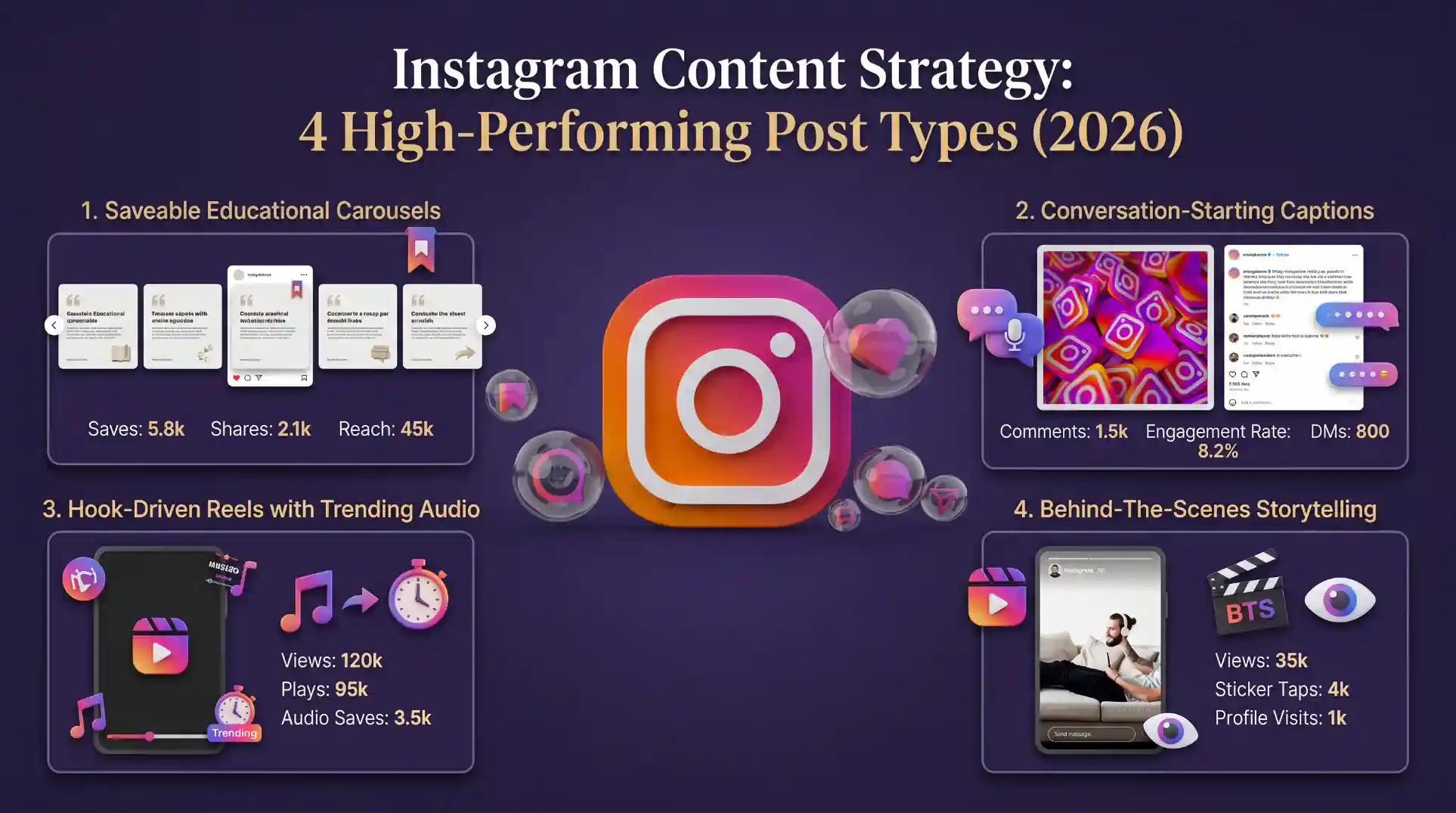
Saves are the best engagement signal on Instagram — they indicate content valuable enough to return to later. What gets saved: how-tos and tutorials, recipe compilations, packing lists and guides, product recommendations, inspirational quotes, resource lists, before-and-after transformations. Execute with educational carousel posts, listicles, or visual guides that people want to bookmark for future reference.
Strategy 2: Start Conversations
Comments signal content that resonates and sparks community. Instead of "Beautiful sunset ☀️," try "Quick question: Do you prefer beach or mountain sunsets? I'm team mountain 🏔️." Use fill-in-the-blank captions, post thoughtful (not inflammatory) opinions, seek advice or recommendations, and create "this or that" discussions. Ask specific questions rather than generic ones — "What's your biggest challenge with X?" beats "What do you think?"
Strategy 3: Hook + Value in Reels
The first 1–3 seconds decide everything. Strong hooks show the result first then the process, ask compelling questions, or make surprising visual statements. Structure example: 0–1 sec: "Reasons your Reels aren't working" → 1–10 sec: Quick actionable tips → 10–15 sec: "Try this and watch your reach grow." Cut every second of dead time. Every moment must deliver value. End with a clear CTA or strong payoff.
Strategy 4: Smart Carousel Use
Carousels work because they keep users on the platform longer (swipe engagement), provide multiple value opportunities, and Instagram rewards long engagement sessions. Most effective formats: before/after transformations (swipe to reveal), step-by-step tutorials, "10 tips for X" listicles, myth-busting (one slide per myth), and product displays with context.
Strategy 5: Post When Your Audience Is Active
Timing still matters for the first-hour engagement window — faster early engagement creates better algorithmic signals. Find your times: Instagram Insights → Audience → Most Active Times. Post 1–2 hours before peak so content is ready when followers arrive. Consistency is more important than chasing the perfect hour.
Mythbusting Popular Algorithm Beliefs
These misconceptions actively hurt reach because they redirect energy away from what actually works.
Organic reach is real. Ads don't guarantee visibility, and organic content can reach millions. The algorithm rewards engagement, not payment. Compelling organic content consistently outperforms poorly-targeted paid posts.
Quantity does not determine reach. Relevance does. 5 targeted hashtags consistently outperform 30 random ones. Spammy hashtag usage can actively hurt reach by flagging your post as low-quality content.
Shadowbans are the result of violations (spam, guideline breaches, bot usage). They don't happen accidentally. Usually temporary. Fix violations, wait the required period, then return to quality posting.
Consistency beats frequency. Posting 3 times per week consistently is better than posting 7 times one week and 0 the next. Quality over quantity — irregular bursts hurt more than a sustainable lower frequency.
Instagram doesn't blacklist posts with links in bio. Posts that send people away from the platform are prioritised less than posts keeping people on Instagram — but this is not the same as penalisation.
The algorithm evaluates engagement rate, not follower count. 10,000 unengaged followers are worth significantly less algorithmically than 1,000 genuinely engaged followers who consistently save, share, and comment.
Engagement pods worked in 2018–2020. They don't now. The algorithm identifies patterns of inauthentic engagement — identical accounts interacting with each other in consistent patterns. This can actively hurt your distribution.
The GTR Socials Perspective: Working With the Algorithm
At GTR Socials, we work with businesses and creators trying to understand Instagram's algorithm, and we're honest about what actually works for sustainable growth.
The biggest myth about Instagram's algorithm: that it's working against you. The fact: the algorithm is neutral. It rewards engagement. If people engage with your content, the algorithm amplifies it. If they don't, it caps it. Most accounts have a single challenge: they're creating content THEY want to create, not content their audience wants to consume.
Getting initial engagement is hard for new accounts. Low engagement signals low quality to the algorithm. This creates a negative feedback loop — tough to break without momentum from the start. Even genuinely excellent content can get buried in this loop if the account lacks baseline engagement signals.
This is where strategic support can help — not by gaming the algorithm, but by providing initial signals that allow quality content a chance to perform. Our Instagram followers, Instagram likes, and Instagram views services use real Instagram users for natural delivery — assisting quality content in gaining initial algorithmic traction.
Strategic support does not substitute for content quality. It doesn't fool the algorithm — you still need to produce genuinely engaging content. If your content doesn't warrant engagement, growth services can't help. If you want overnight success without doing the content work, we're not the right answer. This speeds up discovery of quality content that deserves to be found — it doesn't manufacture results for content that doesn't earn them.
Phase 1 — Content Foundation: Learn what your audience wants. Understand what makes content "saveable" or "shareable." Study what your target audience engages with. Don't worry about growth yet. Phase 2 — Algorithmic Alignment: Incorporate Reels and carousels, optimise for saves/shares/comments, post consistently, analyse what works best. Phase 3 — Strategic Acceleration (optional): If high-quality content isn't gaining initial traction, strategic engagement support helps the algorithm start showing it to more people — with organic engagement as the sustained driver.
Your Instagram Algorithm Action Plan
A structured week-by-week framework for rebuilding your Instagram strategy around the signals that actually drive algorithmic reach.
Learning and Auditing
Understand what's working before changing anything.
- Review performance in Instagram Insights thoroughly
- Identify your most successful content types by engagement type
- Find what gets saves and shares versus just likes
- Check when your followers are most active
- Analyse your top-performing posts — what do they have in common?
Content Optimisation
Rebuild your content around algorithmic signals.
- Increase Reels (2–3 per week minimum)
- Design educational carousel posts for saves
- Write captions that start conversations
- Switch to 5–10 relevant hashtags instead of 30
- Maintain 3–5 posts per week consistently
Optimise and Scale
Double down on what's working, iterate on what isn't.
- Invest more in the best-performing content types
- Test different Reel hooks and formats
- Build genuine community through comment engagement
- Monitor engagement rate trends weekly
- Adjust strategy based on actual performance data
Maintain Momentum
Build the sustainable long-term presence that compounds over months.
- Maintain a consistent posting schedule you can keep for years
- Continue creating value-based, audience-first content
- Watch for algorithm priority shifts (Reels emphasis will evolve)
- Focus on quality interactions, not vanity metrics
- Review top content monthly and build on what resonates
Instagram Algorithm FAQ
Final Thoughts: The Algorithm Rewards Value
The business owner Sarah who wanted to quit Instagram? Six months later I heard from her: "I used to think the algorithm was my enemy. Now I see it was just showing me I wasn't creating content worth engaging with. Once I started creating value, the algorithm became my best marketing tool."
Her Instagram now: 5,800 followers (not many more), engagement rate 15–25% (up from 2.5%), consistent sales via Instagram content, Reels reaching 10K–50K accounts, weekly Explore page appearances. Same company. Same founder. A whole new relationship with the algorithm.
It's not a mystery. It's not mean. It's not trying to make you buy ads. It's a recommendation engine that shows people content they want to consume. Create content people want to engage with and the algorithm will amplify your content far and wide. If people ignore your content, the algorithm throttles it. The algorithm will always reward real engagement over anything else.
The accounts that succeed on Instagram: know their specific audience inside out, create things people want to save, share, and talk about, use content formats the algorithm is currently favouring (Reels, carousels), post consistently month after month, prioritise quality engagement over follower numbers, and deliver real value rather than just attractive aesthetics.
Stop fighting the algorithm. Stop searching for tricks or shortcuts. Start creating content your audience is genuinely interested in. The algorithm will take care of the rest. Your Instagram reach lives in the value you provide. Go build something worth engaging with.
📸 Ready to Give Your Instagram Content the Initial Momentum It Deserves?
GTR Socials helps creators and businesses break through the cold start problem — so your algorithm-aligned content gets the early engagement signals that trigger wider distribution. Real followers, real likes, real results.
Comments (0)