

Maria's restaurant posts reached 80–150 people after 4 years of daily posting to 4,800 followers. Six weeks after understanding what the algorithm actually rewards in 2026: 600–1,200 reach per post, 7–15% engagement, and measurable Friday bookings. Same audience. Completely different approach.
Three weeks ago I sat down with a local restaurant owner, Maria, who was ready to give up on Facebook entirely.
For four years she'd been running her restaurant's Facebook Page, posting daily specials, lovely food photos, and community updates. She had built a following of 4,800 on the page through years of consistent work. But this was her current situation: posts seen by 80–150 people (2–3% of followers), engagement of 5–12 likes and perhaps 1 comment, no measurable impact on foot traffic, 45 minutes a day creating content that seemingly disappeared, and watching random viral page posts get millions of views while her loyal community content got buried.
She told me, exasperated: "I don't get Facebook anymore. Five years ago my posts would be seen by half my audience. Now if 100 people see my posts I'm lucky. My daughter says I should 'boost' posts with ads but I don't have a marketing budget. Did Facebook just… kill organic reach for businesses?"
I had to tell her the answer that most Facebook guides don't want to give: "Yes and no. Facebook's algorithm has totally deprioritised business Pages in favour of friends and family's personal posts. Your 2–3% reach is actually normal now, not a problem with your account. But there are still ways to work with the algorithm — you just have to completely change your strategy from posting promotional content to creating content that sparks genuine conversation."
❌ Before — Wrong Strategy (4 Years)
✅ After — Six Weeks of Algorithm-Aligned Strategy
It's no longer trying to help businesses reach customers organically. It's optimising to keep people engaged with content from friends, family, and groups they care about. If you're a business trying to use Facebook like it's 2016, you're fighting a battle Facebook has structurally set you up to lose. This guide covers the full reality — honestly.
How Facebook's Algorithm Works at a Basic Level
Before diving into tactics, understand the fundamental mechanics — and the 2018 decision that changed everything permanently.
The Algorithm Shift of 2018 That Changed Everything
What Facebook announced in 2018: "We're giving priority to posts from friends, family, and groups over business Pages and media content." What that really meant: organic reach for Business Pages would crash from 10–20% of followers to 2–5%. Facebook's reasoning: user engagement was dropping, people were browsing but not engaging, users complained about too much promotional content, and the business model shift meant charging companies for reach through ads.
This is not a passing trend. It's the permanent new reality. Business Pages will NEVER recover to 2015 levels of organic reach. This is a structural feature of Facebook's business model, not a bug that will be fixed. Planning your Facebook strategy around this reality is the only path to success.
The 3 Core Principles of Facebook's Algorithm
1. Active participation over passive consumption. Facebook promotes content that creates comments (especially longer discussions), shares (particularly to messages), reactions beyond simple likes (love, haha, wow, sad, angry), and back-and-forth conversations. It ignores passive scrolling, one-word comments, clicks without engagement, and consumption without interaction.
2. Friends, family, and groups over Pages and brands. Priority order: personal posts from close friends and family, posts from groups you actively participate in, posts from friends you interact with, video content (especially Reels), and business Page content (lowest priority). Facebook's data shows promotional content drives users away while personal connections keep them coming back.
3. Quality and authenticity over quantity. Facebook measures reading and watching time, meaningful generated interactions, authentic signals, and user satisfaction. The algorithm asks: "Is this post good for this person and will it generate real engagement?"
How the News Feed Really Works
- Inventory gathering: Facebook collects all possible posts (from friends, groups, Pages you follow) — normally 1,000–2,000 potential posts at any given time.
- Signal analysis: Algorithm ranks each post by weighing hundreds of signals, predicts how likely you are to engage, and scores each post.
- Ranking: Posts ranked by predicted engagement and satisfaction — best first. Most posts never get seen.
- Continuous learning: Algorithm tracks what you interact with, adjusts future predictions, and personalises your feed specifically based on your behaviour.
Your Page post is not only competing against other Pages — it's competing against posts from your followers' best friends, family updates, and group discussions. That's why reach is so structurally low. Even the best content from a business Page starts at a massive algorithmic disadvantage before a single person sees it.
Ranking Signals: How Visibility Is Determined
Here's what Facebook's algorithm is actually measuring — broken down by impact weight.
Signal 1: Relationship Score (Most Important)
Facebook's measure of how close you are to the person, Page, or Group posting. For personal relations: how often you engage with their posts, message them, appear in photos together, visit their profile, or search for them. For Pages: frequency of engagement with page content, visits to the page, participation in comments, sharing of posts from the Page. For Groups: your activity level, how often you participate in group posts, whether you're a regular visitor.
Why this kills Page reach: most users have very low relationship scores with business Pages — they followed once and almost never engage. High relationship scores with friends and family mean those posts always win. What you can control: produce content that drives active participation, which builds relationship scores over time.
Signal 2: Post Type (Very High Weight)
Facebook's content priority order in 2026:
Facebook is competing with TikTok and YouTube. Aggressive algorithmic pushing of Reels. Native video outperforms links to YouTube.
Real questions, topics for discussion, authentic personal sharing, life moments, emotional sharing. Content that creates genuine back-and-forth.
More reach than Page posts. Community-oriented content. Facebook actively promotes Groups over Pages.
External links, promotional material, engagement bait, click-through prompts. Business Page content is algorithmically deprioritised by design.
Maria's mistake: promotional content (food photos with prices) got buried. Behind-the-scenes staff stories (personal, conversation-starting) performed 8–10x better.
Signal 3: Engagement Prediction (High Weight)
Facebook forecasts: "Will this particular user engage with this particular post?" — based on posts you've previously engaged with, what similar users interacted with, your typical engagement patterns, and how recently you've engaged with that source. The self-feeding dynamic: if you don't engage with Page posts often, Facebook stops showing you Page posts. Your feed becomes essentially friends, family, and groups. Pages get even less chance to reach you.
Signal 4: Quality and Authenticity (High Weight)
Quality signals Facebook rewards: reshared and original content, clearly thought-out posts with substantial captions, high-resolution images and video, and factual accuracy. Authenticity signals: real personal sharing versus manufactured content, genuine experiences versus promotional messaging. Negative signals that actively restrict reach: clickbait titles, engagement bait ("Tag a friend," "Share if you agree"), disputed or misinformation content, overly promotional language, spam behaviour, and posts requesting likes, shares, or tags.
Signal 5: Recency and Decay (Moderate-High Weight)
New posts shown to a small percentage of followers in the first 1–2 hours — performance in this window determines how far reach extends. First peak at 3–6 hours, steeply declining after 12 hours, nearly dead after 24 hours. Post when your audience is online: more early engagement equals more distribution. Late engagement doesn't resurrect old posts. The exception: a genuinely viral post may continue growing for days.
Signal 6: Type and Depth of Engagement (High Weight)
Maximum value: shares to messages or groups (strongest indicator), meaningful multi-word comments, comment threads with back-and-forth discussion, time spent on long posts and videos. Fair value: reactions beyond likes (love, haha, wow), shorter but genuine comments, saves. Low value: basic likes, clicks without engagement. What Facebook wants: posts that spark real conversations, not just passive acknowledgment.
Pages vs Groups vs Personal: Different Algorithmic Treatment
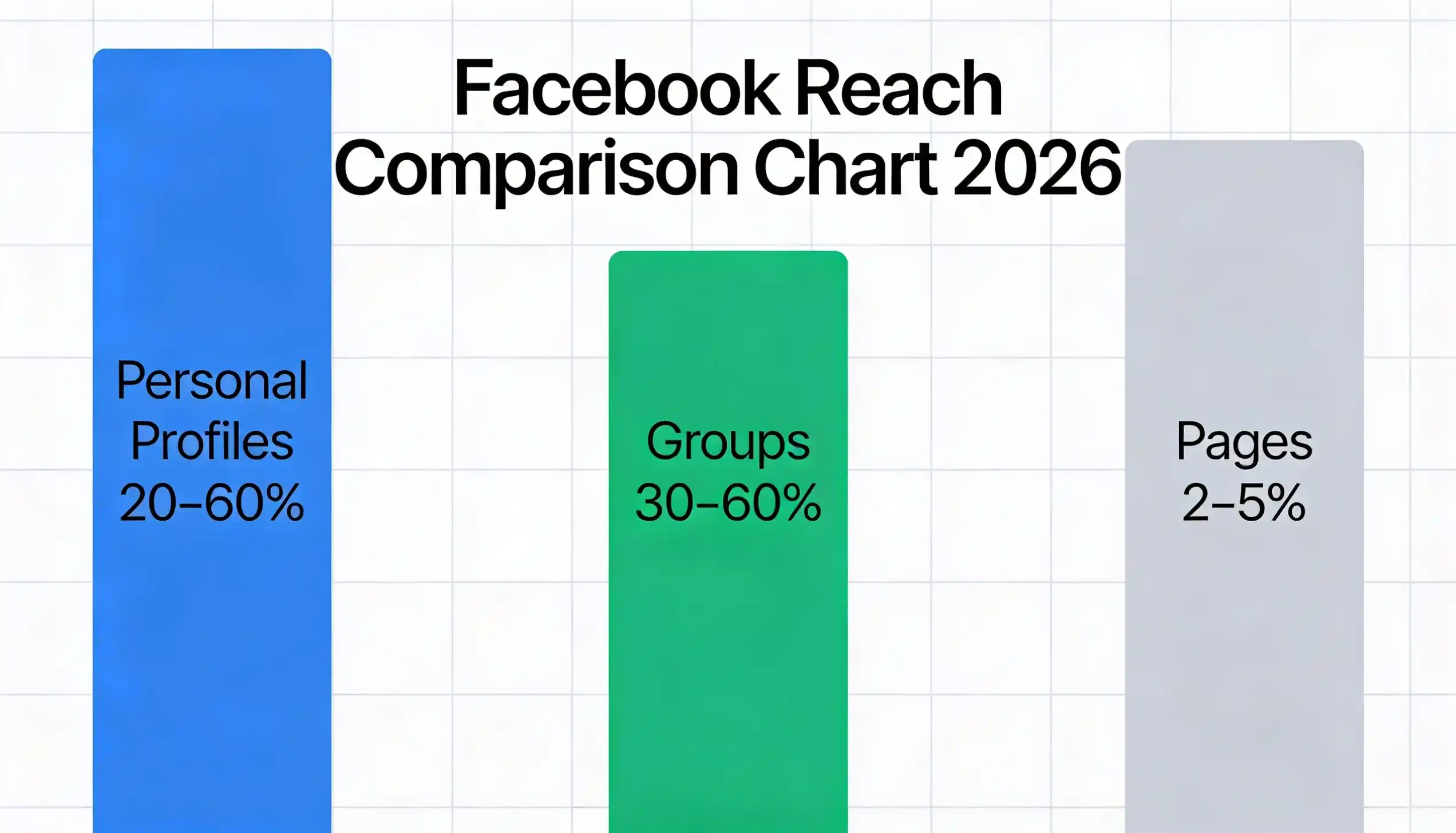
Each surface is treated differently by Facebook's algorithm — understanding the difference determines where you invest your energy.
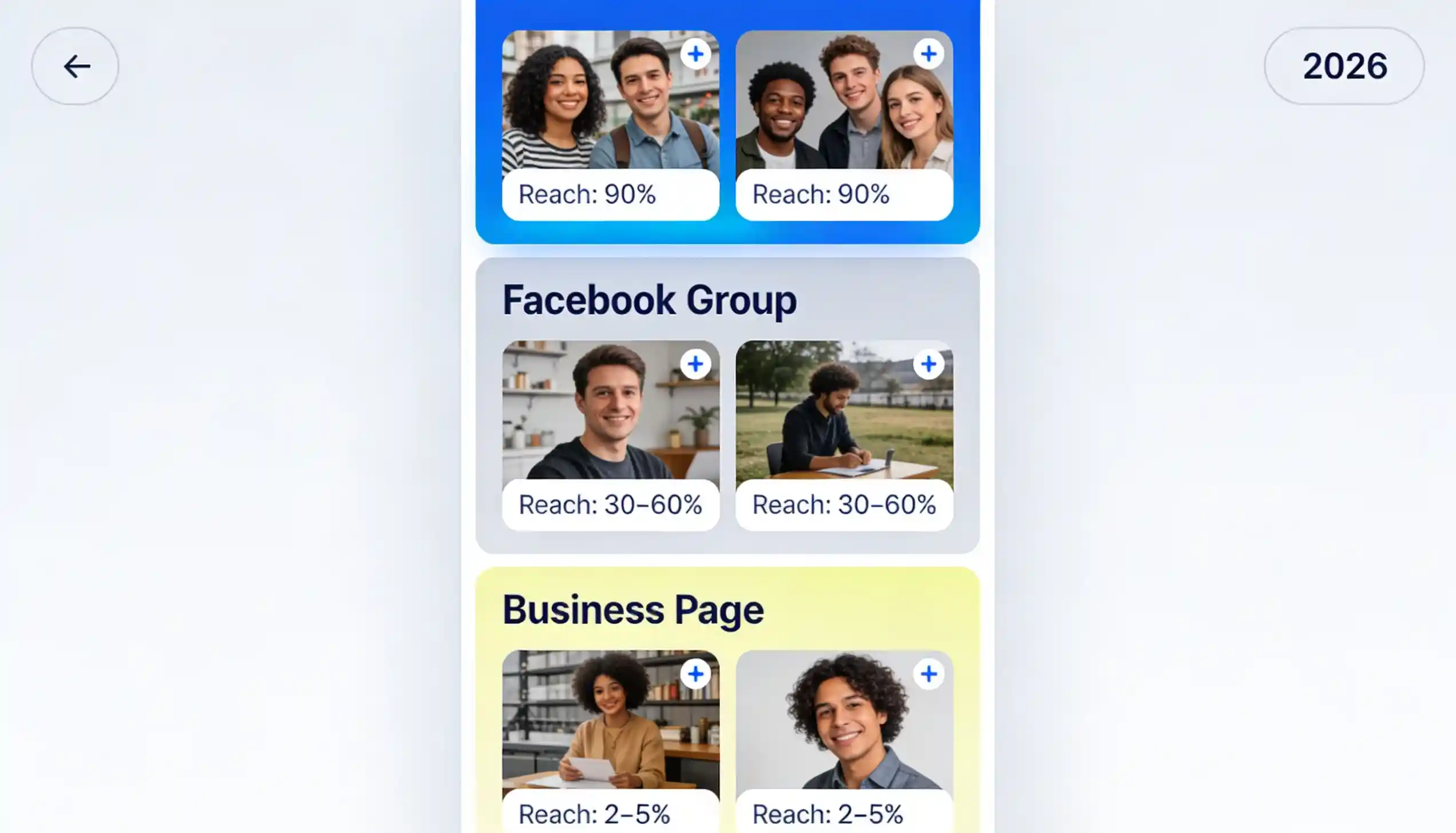
Business Pages
2–5% organic reachDesigned to funnel toward paid ads. Best for Reels, conversation-starting content, and user-generated content. Promotional posts get buried. Official presence + paid reach is the realistic strategy.
Facebook Groups
30–60% active member reachAlgorithm's favourite surface. Community-oriented, non-promotional. 5–10x more engagement than Page posts. Facebook sends notifications that pull people back. Best organic investment.
Personal Profiles
20–60% friend reachStill the most algorithmically favoured. Founder/owner posts about the business (authentically) outperform business Page posts by a large margin. Share business stories as a person, not a brand.
Facebook Pages: The Harsh Truth
Average organic reach for Pages is 2–5% of followers. Only followers who actively interact see posts regularly. Promotional content is especially restricted. The platform is structurally designed to push Pages toward ad spending. What still works for Pages: Facebook Reels (highest organic reach opportunity, discovery beyond your followers), conversation-starting content, user-generated content (customer posts shared with consent), and Facebook Live (which sends notifications to followers). What no longer works: promotional posts, external links, clickbait, irregular posting, generic stock photos with sale text.
The harsh reality: if you're relying on organic Page reach to drive business results, you need Facebook Ads. Organic is for building brand and community — not for direct sales in 2026.
Facebook Groups: The Algorithm's Best Friend
Groups consistently outperform Pages because they align with Facebook's "meaningful interactions" priority, are community-oriented rather than promotional, generate higher engagement rates, and Facebook actively promotes Groups in the algorithm. Group strategy for businesses: build brand community around common interests (not just promotion), encourage member posts and discussions, moderate actively for quality, and use occasional promotional posts sparingly only when they add genuine value. Maria's Group (800 → 1,400 members) with 40–60% reach generated more bookings and engagement than her Page with 4,800 followers at 2–3% reach.
Content Strategies That Work in 2026
These are the specific content approaches aligned with what Facebook's algorithm rewards right now.
Strategy 1: The Conversation Model
Broadcast creates posts that the algorithm buries. Conversation creates posts the algorithm amplifies.
The structure for conversation-starting content: ask a real question, state your personal opinion, encourage differing perspectives, respond to all comments, and end with "What do you think?" The first post has no engagement hook and gets buried. The second asks for comments, starts discussion, and the algorithm distributes it as "meaningful interaction."
Strategy 2: Facebook Reels First
Reels are the single biggest organic reach opportunity on Facebook in 2026 — the platform is competing hard with TikTok and pushing Reels aggressively. Hook in the first 1 second (no branding, instant value), ideal length 7–30 seconds, 9:16 portrait format, trending audio if it fits, and native creation (not shared from Instagram or TikTok — the platform detects and downgrades cross-posts). Reels can reach 10–50x more people than standard posts from the same Page.
Strategy 3: The Value-First Approach
Give value before asking for anything. Value content types: educational tips about your business, behind-the-scenes content, sharing of industry knowledge, problem-solving content, and genuine entertainment. The ratio: 80% community/value content, 20% promotional content — and the 20% should be soft promotion combined with value, not hard selling. This works because the algorithm rewards useful content, it raises your relationship score over time, and it earns you permission to occasionally promote.
Strategy 4: Engage with Facebook Live
Facebook sends notifications to followers when you go live. News Feed priority increases during live broadcasts. Real-time comments create instant active engagement — the strongest signal Facebook can read. Business ideas for Live: Q&A sessions, behind-the-scenes tours, product demonstrations, staff or customer interviews, event coverage. Best practices: tease the upcoming Live to build anticipation, respond to comments as they appear, sweet spot of 10–20 minutes, save Lives for repurposing as regular video, and schedule weekly Lives at the same time to build audience habits.
Strategy 5: Feature Your Community
Make your community members the stars: customer spotlights, user-generated content shares (with permission), celebrating community member achievements, testimonials framed as stories not ads, and tagging customers in posts (they then engage and share, extending your reach to their networks). This generates mutual engagement, provides authentic social proof, encourages community members to share with their networks, and builds relationships beyond transactions. Maria's monthly "Regular Spotlight" post featuring loyal customers got 5–10x the engagement of her normal posts.
Common Mistakes That Kill Your Reach
These are the patterns that silently sabotage Facebook reach — often while the creator believes they're doing everything right.
Posts designed to trick people into engaging: "Tag someone who needs to see this!", "Like if you agree, share if you REALLY agree!", "True fans will comment 'YES'!" Facebook actively penalises this — it violates policy, greatly limits scope, and can result in Page penalties.
Linking to other websites (especially other social platforms). Facebook wants people to stay on Facebook. External links mean users leave the site. Algorithm deprioritises link posts significantly.
Posting identical content on Facebook, Instagram, Twitter, and LinkedIn simultaneously. Different platforms have different formats and audiences. The cross-posting is obvious and lazy. Facebook detects Instagram shares and explicitly deprioritises them.
Several posts per day to "stay visible." This causes follower fatigue (people hide your posts), distributes engagement across too many posts, looks like spam, and dilutes the quality of each individual post.
Posting without responding to comments that come in. Conversation depth is a ranking signal. A response creates a back-and-forth that the algorithm loves. Not responding signals you don't care about the community. Relationship scores fail to develop.
Using 20+ hashtags as you would on Instagram. On Facebook, hashtags barely matter — unlike Instagram, they don't significantly impact reach. Hashtag stuffing looks spam-like and doesn't help.
Your Facebook Strategy Action Plan
A structured week-by-week plan for rebuilding your Facebook strategy around what actually works in 2026.
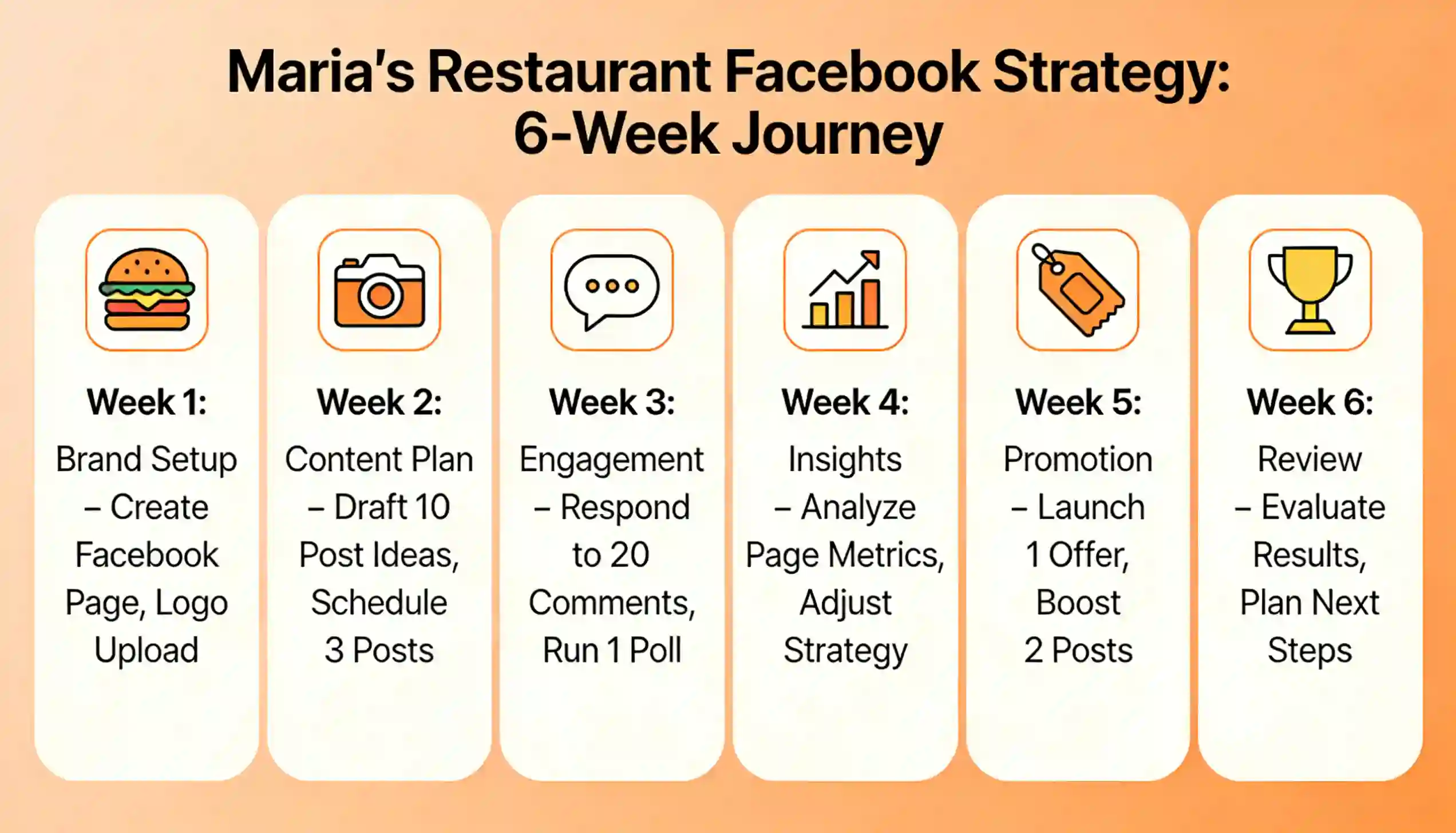
Accept the Reality and Pivot
The most important phase — reframing expectations before changing tactics.
- Accept that 2–5% Page reach is normal and not fixable organically
- Audit current content to identify what actually gets engagement
- Decide whether a Group or Reels strategy (or both) makes sense
- Set realistic expectations for organic reach going forward
- Research Facebook Ads basics — you'll almost certainly need them
Build Your Community Foundation
Shift from broadcasting to community building.
- Create a Facebook Group if appropriate for your business
- Post 3–5 times weekly to Page (quality, conversation-starting content only)
- Experiment with Reels (1–2 per week minimum)
- Focus every post on sparking conversation, not announcing
- Respond to every comment within 1 hour of posting
Find What Works and Double Down
Analyse, refine, and begin strategic paid investment.
- Analyse which content types generate real engagement vs. passive views
- Double down on what works, eliminate what doesn't
- Test Facebook Live (weekly or biweekly at minimum)
- Grow Group membership with quality community content
- Start Facebook Ads with a small test budget ($50–150/month)
Build the Sustainable Long-Term Strategy
The division of labour that makes Facebook work for businesses in 2026.
- Organic for community and relationships (Groups, conversations, Reels)
- Paid for reach and conversions (ads for promotions, events, launches)
- Groups for engaged community (your highest organic reach surface)
- Reels for discovery (your best chance to reach new audiences)
- Monitor algorithm changes and adapt — the platform keeps evolving
FAQ: Facebook Algorithm
Final Thoughts: Facebook Evolved — Strategy Must Evolve Too
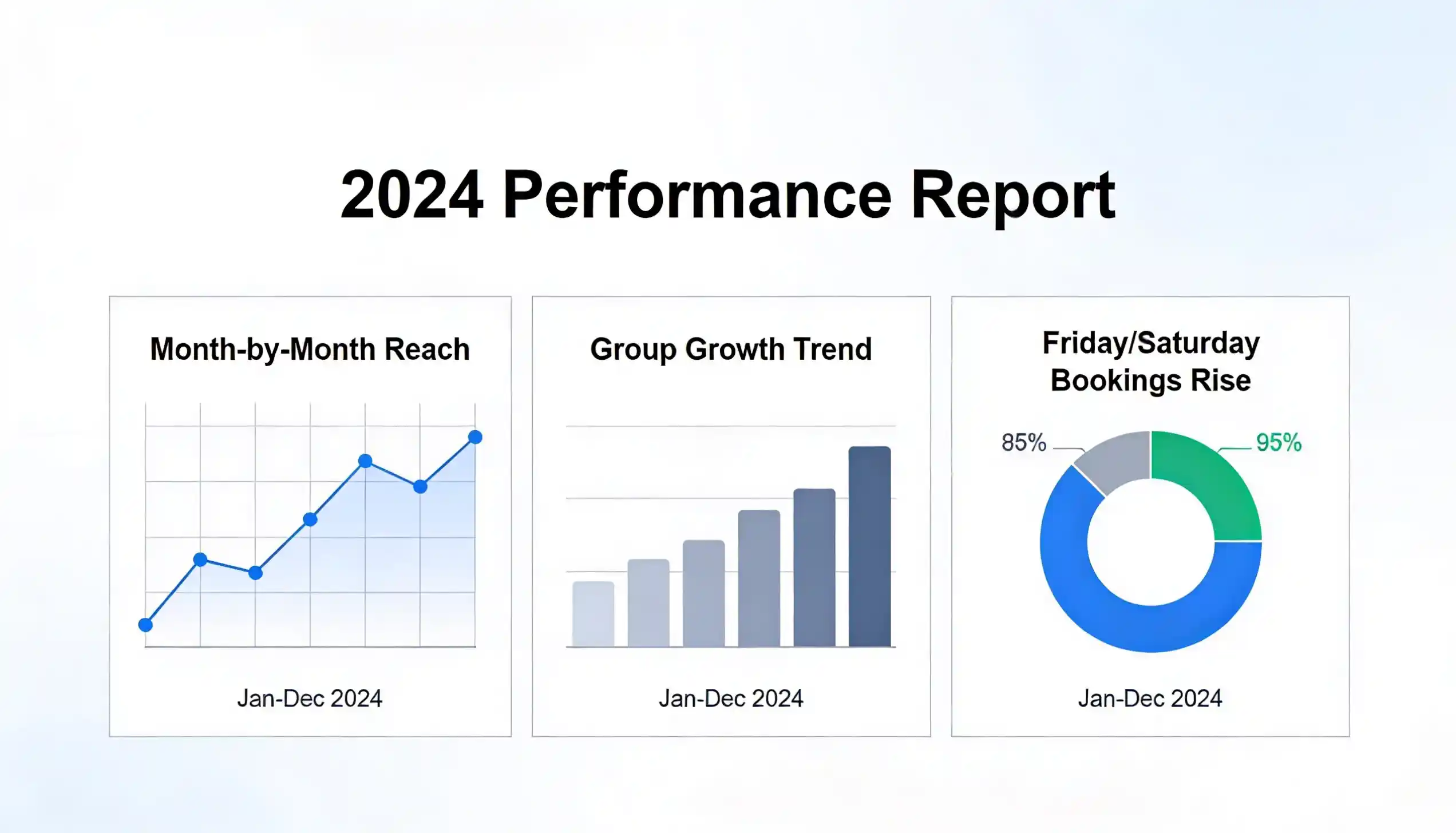
Four months after our first conversation, Maria's Facebook strategy and results had been completely transformed. Her new approach: 3 Page posts per week (behind the scenes, conversation starters), daily community conversations in her Group (1,400 members, 40% reach), 2 Reels per week (cooking tips, 5K–20K views), a $150/month Facebook Ads budget for specials and events, and zero "salesy" promotional posts.
Her results: more bookings from the Group than from the Page alone, Reels attracting new customers who discover the restaurant through cooking content, ads providing predictable reach for time-sensitive promotions, less time required (20 minutes a day versus 45), and better ROI on both effort and ad spend.
What she told me: "I was trying to use Facebook strategies from 2016 in 2026. Once I accepted that organic Page reach is dead and changed my approach — Groups, Reels, strategic ads — Facebook became useful again. Just very differently than before."
It isn't broken. It is working exactly as Facebook designed it — favouring posts from friends and family over business Pages, meaningful interactions over passive consumption, native content (especially Reels) over external links, Groups over Pages, quality conversations over promotional broadcasts. The businesses that win on Facebook accept this reality, build engaged Groups for community, use Reels for organic discovery, invest in Facebook Ads for reach and conversions, focus on conversations not broadcasting, and adapt to algorithm priorities rather than fighting them.
Your recipe for Facebook success: embrace the new reality (organic Page reach is not returning), integrate Groups (30–60% reach versus 2–5% on Pages), create Reels (best organic discovery opportunity), budget for ads (necessary for consistent business reach), emphasise conversation over promotion, prioritise quality over quantity (3–5 good posts beats daily mediocre posts), and create platform-native content (no cross-posting from Instagram). Don't chase 2016 organic reach. Don't fight Facebook's algorithmic design. Start building community in Groups. Start creating Reels for discovery. Budget for Facebook Ads to supplement organic. Begin embracing Facebook's new reality and shape your strategy accordingly. Your Facebook success is not in a hack to get organic reach back. It's waiting in a strategy optimised for how Facebook actually works in 2026.
Maria's Results: What the Right Facebook Strategy Actually Produces
Build community. Start conversations. Invest wisely. The algorithm will work with you when you stop fighting against its fundamental design.
👍 Ready to Build a Facebook Presence That Actually Works in 2026?
GTR Socials helps businesses build real Facebook engagement — followers who interact, likes that signal quality, and the community foundation that gives your content the algorithmic signals it needs.
Comments (0)