

That sinking feeling in your stomach when you search for someone's Instagram profile and it just... disappears.
You type their username—the one you've typed a hundred times before. Maybe it's an ex. Maybe it's someone you had a falling out with. Maybe it's just someone whose content you realized you were checking way too often.
The search results load. Nothing. You try again, thinking maybe you misspelled it. Still nothing. Or worse—you find the profile, tap on it, and see "User Not Found" staring back at you like a digital slap in the face.
Your mind races: Did they delete their account? Change their username? Or... did they block me?
Instagram doesn't tell you when someone blocks you. There's no notification, no alert, no "Hey, Sarah just blocked you." You're left piecing together clues like a detective investigating a crime you didn't commit. And that uncertainty? That's what makes it sting even more.
This comprehensive guide will walk you through everything you need to know about Instagram blocking in 2026: the definitive signs, the psychology behind why it hurts so much, and most importantly—what to do next. Because knowing is only half the battle. How you respond matters just as much.
The 7 Definitive Signs You've Been Blocked on Instagram
Instagram doesn't make this straightforward. Unlike some platforms that explicitly notify you when someone blocks you, Instagram leaves you to figure it out through specific, telltale signs.
🔍Sign #1: They Vanish from Instagram Search
This is usually your first red flag. You open Instagram, tap the search icon, and type their username. Three scenarios might unfold:
- Scenario A: Nothing appears at all—their profile doesn't show up in search results even though you know the exact username
- Scenario B: Multiple accounts with similar names appear, but not theirs
- Scenario C: Their account appears but when you tap it, you get an error message or see no posts, 0 followers, 0 following
📱Sign #2: "User Not Found" or "No Posts Yet" on Their Profile
Maybe you bookmarked their profile, or you found their username through old comments or DMs. You tap the link and see one of these messages:
- "Sorry, this page isn't available."
- "User not found."
- "No posts yet" (with 0 posts, 0 followers, 0 following)
If you see "No Posts Yet" combined with triple zeros (0 posts / 0 followers / 0 following), that's a strong indicator of blocking. They haven't deleted their account—you're just being prevented from seeing it.
The dreaded "User Not Found" message is one of the clearest signs you've been blocked
💬Sign #3: Past Conversations Look Different
Head to your Instagram DMs. If you've ever messaged this person, search for their name in your conversation list. When someone blocks you:
- Their profile picture disappears from the conversation
- Their name changes to "Instagram User"
- Tapping their name at the top of the conversation thread shows an error instead of opening their profile
- You can still see your past message history, but you can't send new messages
If someone deletes their account, their profile picture and name also disappear in DMs, showing "Instagram User." The difference? With account deletion, EVERYONE sees this. With blocking, only YOU see it. That's why you need Sign #4.
👥Sign #4: Ask Someone Else to Search for Them
This is the confirmation test. Ask a friend—ideally someone who doesn't follow this person and isn't connected to your situation—to search for the account.
If your friend can find the account but you can't, you're blocked. Period.
Your friend should be able to:
- Search the username and find it immediately
- See their profile picture and bio (if public) or at least their picture (if private)
- View their post count, follower count, and following count
Pro tip: Have your friend take screenshots. Sometimes seeing it from another person's perspective helps you accept the reality.
🏷️Sign #5: You Cannot Tag Them
Try tagging the person in a comment on another person's post, or in a caption on your own post. Type the @ symbol followed by their username.
If they've blocked you:
- Their username won't appear in autocomplete suggestions
- If you manually type their full username, it won't become a clickable link
- The tag will post as plain text instead of a clickable mention
🔗Sign #6: Mutual Connections Have Changed
If you and this person had mutual followers, check those connections. Look at accounts you both followed or followers you had in common.
If the person no longer appears in comments sections of mutual friends' posts, or if they're absent from follower lists they should logically be on, that's another clue.
Instagram blocks create a complete separation—their comments don't show up to you, their likes are invisible to you, and they're essentially erased from your Instagram experience.
⚡Sign #7: The "Follow" Button Glitches
Here's something strange that occasionally happens: You find an old direct link to their profile (maybe from a screenshot, email, or external website) and miraculously land on their profile.
You try tapping "Follow" and one of these occurs:
- The button doesn't respond at all—nothing happens when you tap it
- It briefly changes to "Requested" (private account) or "Following" (public account) then immediately switches back to "Follow"
- No matter how many times you try, you simply cannot follow them
This happens because Instagram's system is fighting itself: you technically accessed the profile through a direct link, but you're blocked, so the app won't let you follow. This glitch loop confirms blocking.
If you've experienced 4+ of these signs, especially Signs #2, #3, and #4, you're almost certainly blocked. Time to move to the official verification process.
Block vs. Restrict vs. Mute: Understanding the Differences
Before we go further, let's clarify the three ways someone can limit interaction with you on Instagram. Not all of these are "blocking"—understanding the distinction is crucial.
🚫Blocking (The Nuclear Option)
What happens when someone blocks you:
- You can no longer find their profile in search
- Their profile, posts, and stories become invisible to you
- You're automatically unfollowed (and they unfollow you)
- Past DMs remain visible but you can't send new messages
- You can't tag them in posts or comments
- Their comments on mutual posts don't appear to you
Why people block: They want zero interaction with you, they're protecting their mental health or peace, there's unresolved conflict or drama, they feel harassed or uncomfortable, or they're trying to move on completely.
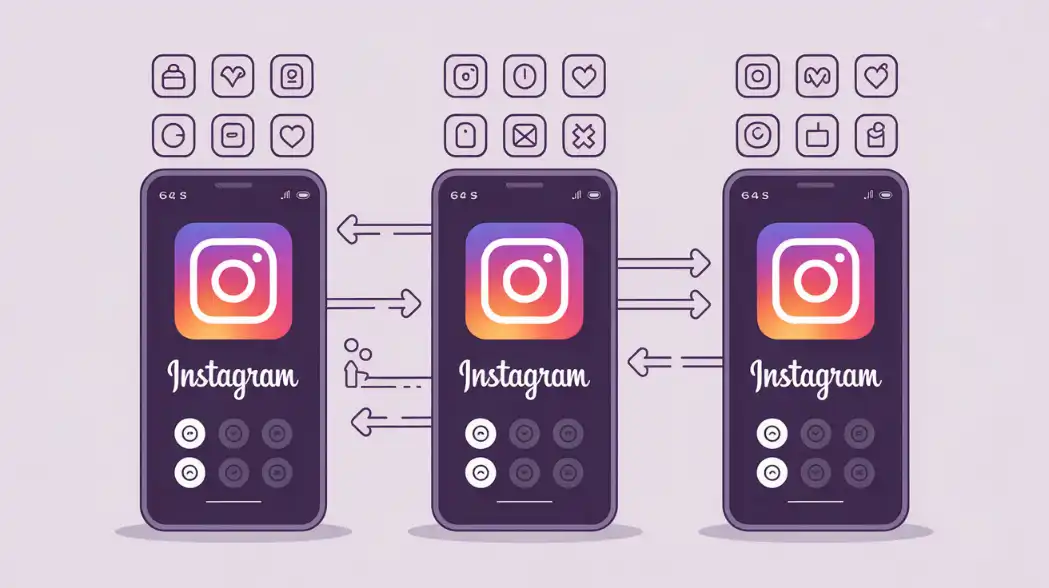
Understanding the three privacy options helps you interpret what's really happening
🔒Restricting (The Softer Approach)
What happens when someone restricts you:
- You CAN still see their profile and posts
- You CAN comment on their posts, but:
- → Only YOU can see your comments (they're hidden from others)
- → The account owner can approve them (making them visible) or ignore them
- Your DMs go to their Message Requests folder, not their main inbox
- They don't get notifications when you message them
- There's no indication if they've read your messages
Why people restrict: They want distance without confrontation, they're conflict-avoidant and blocking feels too aggressive, they want to monitor your behavior without engaging, or they're keeping tabs while maintaining boundaries.
Restricting is the middle ground—you're not completely blocked, but you're definitely being managed. It's passive-aggressive distancing disguised as "being nice."
🔇Muting (The "I Need a Break" Option)
What happens when someone mutes you:
- Your posts and stories don't appear in their feed
- You remain completely unaware—there's no way to know
- They can still visit your profile and see everything
- From your perspective, nothing changes at all
Why people mute: They need a break from your content without unfollowing, they're going through something personally and reducing their feed, they're gradually distancing but still check in occasionally, or your posting frequency is overwhelming them.
Muting is the gentlest form of distancing—you literally can't detect it, which is kind of the point.
| Action | Can See Profile? | Can Comment? | Can DM? | Can Tag? | You Know? |
|---|---|---|---|---|---|
| Blocked | ❌ No | ❌ No | ❌ No | ❌ No | ✅ Yes (signs) |
| Restricted | ✅ Yes | ⚠️ Hidden | ⚠️ Requests | ✅ Yes | ❓ Maybe |
| Muted | ✅ Yes | ✅ Yes | ✅ Yes | ✅ Yes | ❌ No |
Step-by-Step Verification: Confirm You're Actually Blocked
Let's establish a clear testing process so you're not just guessing. Follow these steps in order for definitive confirmation.
Search Their Username in Instagram Search
Action: Open Instagram → Tap search icon → Type their exact username → Check results
Result: Profile appears normally = Not blocked (might be restricted/muted). Profile doesn't show or shows "User Not Found" = Proceed to Step 2
Check Your Direct Message History
Action: Go to Messages → Search for past conversations with them
Result: Conversation exists with normal name/picture = Not blocked. Conversation shows "Instagram User" with no picture = Proceed to Step 3
Ask a Friend to Search
Action: Ask a trusted friend (who doesn't follow them) to search the username
Result: Friend can't find them either = They deleted their account or drastically changed username. Friend can find them normally = You are blocked—this confirms it
Access Profile from Old Links/Comments
Action: Try accessing their profile from old saved links, Google searches, or comments on mutual friends' posts
Result: Profile loads normally = Username changed or temporary glitch. Shows error, "No posts yet," 0/0/0 stats = Confirmed block
Try Tagging Them in a Comment
Action: On any post, type @ + their username to tag them
Result: Name appears in autocomplete and tags successfully = Not blocked. Name doesn't appear or tag doesn't work = Blocked
Why People Block: The Real Reasons (It's Not Always Personal)
Before you spiral into self-blame, understand that blocking often has nothing to do with your worth as a person. Here are the actual reasons people block others on Instagram:
🛡️Reason #1: Self-Preservation
Sometimes blocking is purely about protecting their own mental health—not punishing you.
Maybe they're going through a breakup and seeing your posts (even innocent ones) causes pain. Perhaps they're trying to break an obsessive habit of checking your profile and need a forced boundary. Or they're establishing digital detox boundaries and removing triggering accounts.
💔Reason #2: Moving On
Post-relationship blocks are incredibly common. Ex-partners often block to:
- Avoid the temptation to check up on you
- Prevent jealousy when seeing you with someone new
- Create a clean break so they can heal
- Remove painful reminders of what's passed
This isn't about hatred—it's about self-protection during emotional recovery.
🎭Reason #3: Drama Avoidance
Blocking is often the quickest solution to end conflict, tension, or drama. Instead of:
- Having difficult conversations
- Setting verbal boundaries
- Managing the awkwardness of unfollowing
Some people just... block. It's the digital equivalent of changing your phone number. Clean. Final. Done.
👁️Reason #4: Privacy Concerns
If you've been:
- Screenshot their stories frequently
- Commenting on EVERY post
- Watching their stories within seconds of posting
- Searching through posts from months or years ago
These behaviors can make people uncomfortable, even if your intentions are innocent. If someone feels watched, monitored, or stalked (even unintentionally), blocking is their protection mechanism.
🔄Reason #5: Relationship Changes
Friendships end. Work relationships change. People drift apart.
Blocking sometimes just acknowledges the reality: you're no longer part of each other's lives. It's not dramatic—it's just honest.
🧹Reason #6: Digital Decluttering
Some people periodically unfollow or block accounts as part of digital detoxes or life resets. Even if you weren't close, you might just be collateral damage in their larger cleanup effort.
❓Reason #7: Accidental Blocking
Yes, it happens. Someone could accidentally tap "Block" instead of "Mute." Instagram's interface isn't perfect, and accidental blocks do occur. If someone suddenly blocked you despite having a neutral or positive relationship, it might be a mistake.
Most blocks aren't about you being "bad" or "unworthy"—they're about someone else's needs, boundaries, healing, or self-protection. Don't let someone else's boundaries diminish your self-worth.
The Psychology of Being Blocked (Why It Hurts So Much)
Let's talk about why being blocked feels intensely personal, even when you rationally know it might not be.
🧠The Neuroscience of Social Rejection
Being blocked triggers rejection—one of the deepest social pains humans experience. Studies show that social rejection activates the same brain regions as physical pain.
⚖️Loss of Control
When someone blocks you:
- You can't see what they're doing
- You can't respond or explain yourself
- You have zero power to change the situation
This powerlessness triggers anxiety. Humans crave control, and blocking strips it away entirely.
🤔The Ambiguity Factor
Without understanding WHY you were blocked, your brain creates narratives:
- "They must hate me"
- "I did something terrible"
- "Everyone probably thinks I'm awful"
These worst-case scenarios often aren't true—but ambiguity lets your mind run wild.
👥Social Status Threat
If mutual friends can still see this person's content while you can't, it feels like:
- You're excluded from an "in-group"
- You're less important than others
- You've been socially demoted
This tribal rejection instinct is hardwired into human psychology from thousands of years of evolution.
💭The Interpretation Trap
Blocks often feel like judgments: "You're not good enough to see my content." Even when the blocker's actual thought might be: "I need space to heal."
The impact on you feels like rejection, even when their intention was self-protection.
Understanding WHY it hurts doesn't make the pain disappear—but it helps you process it rationally instead of spiraling. Your brain is reacting to perceived social threat. That's biology, not reality.
What to Do When You've Been Blocked (Emotionally Intelligent Responses)
So you've confirmed you're blocked. Now what? Here are your options, ranked from healthiest to least advisable:
✅Option 1: Respect It and Move On (The Mature Choice)
This is usually the best option. When someone blocks you, they're clearly communicating: "I don't want contact." Even if it seems unfair or you don't understand why, respecting their boundary is the right move.
What this looks like:
- Don't create fake accounts to view their profile
- Don't contact them via other social platforms
- Don't reach out through mutual friends to ask why
- Don't leave comments on mutual friends' posts hoping they'll see
- Don't post vague-posts clearly directed at them
Process your feelings privately—with friends, journaling, or a therapist—but give the person space.
📞Option 2: Reach Out Through Other Channels (Only If Necessary)
There are rare situations where reaching out might be appropriate:
- You share custody or co-parenting responsibilities
- There's a financial or legal matter requiring communication
- Safety or emergency concerns exist
- You need to coordinate logistics for a shared commitment
If you absolutely must reach out:
- Use text or email (professional and brief)
- State only the practical necessity
- Avoid emotional appeals or asking "why did you block me?"
- Respect if they don't respond
If the issue isn't urgent or practical, DO NOT use it as an excuse to violate their boundary. "We need to talk" is not a valid emergency.
🪞Option 3: Reflect on What Happened
If multiple people have blocked you, or it's happened repeatedly, some self-reflection might be valuable:
- Am I oversharing or posting content that makes people uncomfortable?
- Am I engaging with others' content in ways that feel intrusive?
- Did I breach someone's trust or share private information?
- Am I bringing drama or negativity into people's feeds?
- Do I comment in ways that create conflict?
Blocking can sometimes be feedback about behaviors you didn't realize were problematic. Take it seriously.
⏳Option 4: Give It Time
Some people block temporarily. They might:
- Need space after an argument
- Be processing emotions
- Want a break from social media entirely
I've seen people unblock others weeks, months, or even years later—once they've healed, grown, or simply stopped caring.
Don't wait around hoping for it. Just... be patient and focus on your own life.
Focus on building positive connections rather than dwelling on those who've disconnected
What NOT to Do (Seriously, Don't Do These Things)
Let's be crystal clear about responses that WILL make things worse:
🚫Don't Harass Them
- Creating burner accounts to view their profile = harassment
- Enlisting friends to send messages for you = harassment
- Showing up in person to "talk about it" = harassment
This behavior could escalate to legal consequences. It's not romantic, it's not persistent—it's stalking.
📢Don't Publicly Shame Them
Posting about being blocked, calling them out by name, or trying to turn mutual friends against them is:
- Immature
- Manipulative
- Makes YOU look bad, not them
Handle your feelings privately. Public drama only confirms their decision to block you was correct.
🌀Don't Let It Consume You
Yes, being blocked stings. But it's also... not that significant in the grand scheme of your life.
- Your value doesn't decrease because someone can't see your Instagram
- Your worth isn't determined by who follows you
- Life continues—there are billions of people who haven't blocked you
Don't give someone who doesn't want you in their digital space this much power over your emotional state.
Never: Create fake accounts to stalk them. Never: Ask mutual friends to spy for you. Never: Send them messages from different platforms. Never: Post about them indirectly. Never: Try to "get revenge" by blocking them back or spreading rumors. All of these behaviors are toxic and will haunt your reputation far longer than the blocking will hurt.
When YOU Should Block Someone on Instagram
Flip the script: there are times when YOU should absolutely block someone. Healthy boundaries include protecting your digital peace.
🛡️Block When:
- Someone is harassing, threatening, or abusing you
- An ex is preventing you from moving on emotionally
- Someone's content triggers negative mental health responses
- You're breaking an unhealthy pattern of checking their profile obsessively
- Someone violated your trust or privacy
- You need complete separation for your wellbeing
🔒How to Block Someone on Instagram
Navigate to Their Profile
Search for and open the profile you want to block
Tap the Three Dots
In the top-right corner of their profile, tap the three-dot menu icon
Select "Block"
Choose "Block" from the menu options that appear
Confirm the Block
Instagram will ask you to confirm—tap "Block" again to finalize
What they'll experience: They won't be notified immediately, but they'll eventually notice the signs we discussed earlier when they try to interact with you.
⚖️Block, Restrict, or Mute? When to Use Each
| Use This | When You Want To... |
|---|---|
| Block | Completely cut off all interaction—no contact, no visibility, total separation |
| Restrict | Limit their interaction without confrontation—hide comments, filter DMs, maintain distance |
| Mute | Take a break from their content without unfollowing—keep connection but reduce exposure |
Choose the tool that meets your needs without causing unnecessary harm to others.
Digital Boundaries and Healthy Instagram Use
Being blocked (or choosing to block) is ultimately about digital boundaries. Let's discuss what healthy Instagram use actually looks like.
🧘Signs Your Instagram Use Might Be Unhealthy
- Checking certain profiles compulsively: If you're checking someone's profile multiple times daily, Instagram might be feeding an unhealthy habit
- Deriving self-worth from engagement: If likes, comments, and followers determine your mood, you've outsourced your confidence to strangers
- Anxiety when blocked from content: If being unable to see someone's posts causes genuine distress, that's dependency
- Comparing your life to curated content: Remember: Instagram is everyone's highlight reel, not their reality
Being blocked might be the universe's way of saying "take a break—this isn't healthy for you." Sometimes forced boundaries protect us from our own unhealthy patterns.
🌱Building Authentic Instagram Presence
While you're worried about who blocked you, others are focused on building genuine, engaged communities on Instagram. That's where services like GTR Socials come in.
Here's something important to understand: As your Instagram account grows, some people WILL unfollow you. Some will block you. That's not failure—that's natural selection of your audience.
Our approach focuses on:
- Delivering real followers who align with your niche and interests
- Improving engagement rates with authentic interactions
- Growing accounts organically through targeted promotion
- Building communities that stick around and engage consistently
Because here's the truth: The person who blocked you wasn't your ideal follower anyway. They weren't engaged with your content. They weren't invested in your journey. Losing them creates space for people who actually appreciate what you offer.
Focus on building an audience that CHOOSES to engage with you, rather than trying to retain people who clearly don't want to be there.
🚀 Build an Engaged Instagram Community
Stop worrying about who blocked you. Start focusing on attracting followers who genuinely care about your content. GTR Socials helps you grow authentically with real engagement from real users.
Or explore our complete Instagram growth services
Frequently Asked Questions About Instagram Blocking
Will Instagram notify me if someone blocks me?
No. Instagram doesn't send notifications when someone blocks you. You'll need to identify the signs we discussed throughout this guide to confirm blocking.
Can I still see their comments on mutual friends' posts if they blocked me?
No. When someone blocks you, their entire presence becomes invisible to you across Instagram. You won't see their comments, likes, or tags anywhere—even on mutual friends' posts.
Will past direct messages disappear if someone blocks me?
No. Your DM history remains intact, but their name will change to "Instagram User" and their profile picture will disappear. You can see old messages but can't send new ones.
If someone unblocks me, will I be notified?
No. Like blocking, unblocking happens silently. You'll only discover they've unblocked you if you search for their profile and find it accessible again.
Can someone see my profile after they've blocked me?
Yes. Blocking is one-directional. When someone blocks you, they can still view your profile—you just can't view theirs. It's asymmetrical access.
What's the difference between "User Not Found" and "No Posts Yet"?
"User Not Found" usually means the account was deleted or the username changed. "No Posts Yet" with 0/0/0 stats typically indicates you've been blocked and can't access their profile.
Can business accounts block personal accounts?
Yes. Instagram business accounts have the same blocking capabilities as personal accounts. The account type doesn't affect blocking functionality.
Will they know if I block and then unblock them?
They won't receive a notification, but they might notice if they were paying attention to your account and suddenly regain access. Instagram doesn't alert users to block/unblock actions.
How long does an Instagram block last?
Blocks last indefinitely until the person who blocked you chooses to unblock you. There's no automatic expiration—it's entirely under their control.
Can I request Instagram to tell me who blocked me?
No. Instagram has no feature to request blocking information, and their support team won't disclose who has blocked you. Privacy protection goes both ways.
Final Thoughts: Blocking Is About Them, Not You
Here's the core truth you need to internalize:
Being blocked says more about the other person's needs than it does about your worth.
They need space. They need boundaries. They need protection. They need to move on. They need distance. These are all valid reasons to block someone—and none of them mean you're a bad person.
Your worth doesn't decrease because someone chose not to see your Instagram profile. You're not less valuable because someone established a boundary. If your behavior was genuinely harmful, use this as growth. Otherwise, accept that people make decisions for their own reasons that often have nothing to do with your inherent worth.
Focus on the people who DO want you in their feed. Create content that adds real value. Build genuine relationships. Use Instagram as a tool for joy, creativity, and community—not as a measurement of your social worth.
And if someone blocking you freed up mental space that you'd been wasting on checking their profile? Maybe it was actually a blessing in disguise.
Remember: The accounts that matter are the ones that engage with you, support you, and want to see your content. Everything else? Just noise.
Focus on building connections with people who choose to stay.
Your Instagram presence should bring you joy, not anxiety. Build boundaries that protect your peace, and surround yourself with digital connections that enhance your life.
Comments (0)