

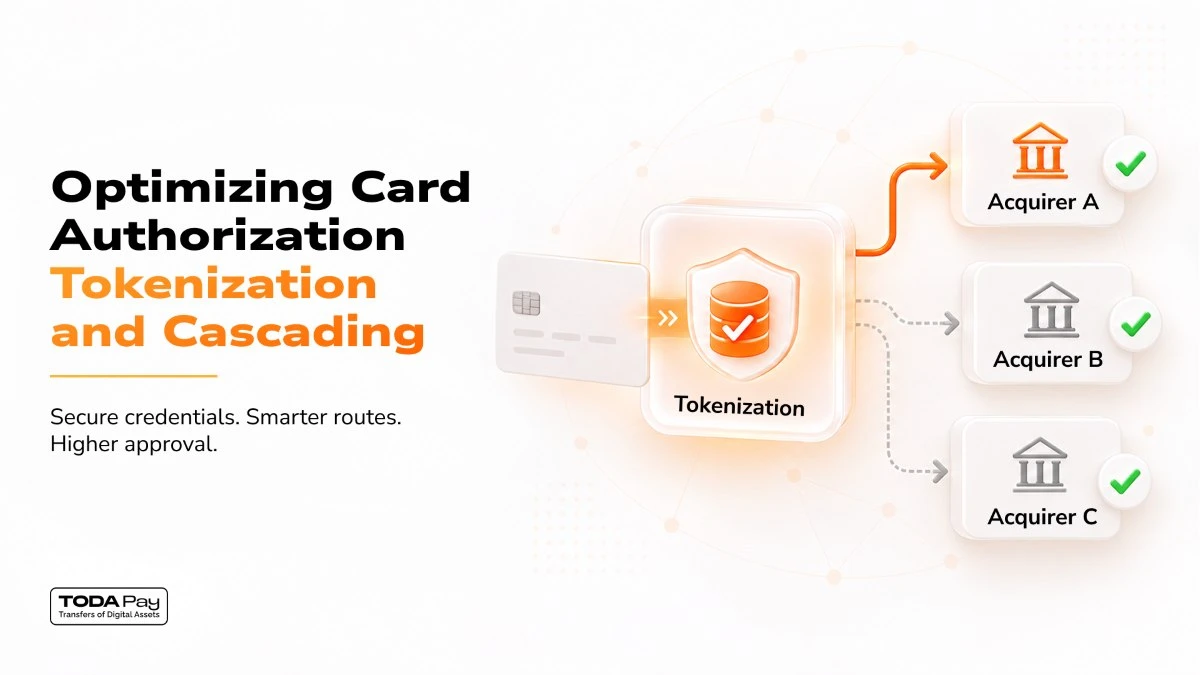
In 2026, a 5 to 12% authorization rate gap separates top-tier platforms from legacy processors. Maximizing approval requires uniting network-level credential management with intelligent multi-acquirer routing. Relying on single-pipe processing leaves millions in recurring revenue behind. To optimize card payment approval rates, merchants must unite credential integrity with dynamic network routing. This dual architecture permanently solves the performance gap plaguing modern checkouts.
Closing the Authorization Gap in Merchant Card Services
Roughly 80 to 90% of online payment rejections represent soft declines rather than true fraud. Generic "Do Not Honor" codes or temporary risk triggers cause unnecessary friction during checkout. Legacy processors treat authorization as basic plumbing, which hurts your bottom line. Consequently, this complacency leaves massive amounts of high-AOV revenue on the table.
But here is the catch: several specific structural issues trigger these recoverable failed transactions regularly.
-
Cross-border processing mismatches that trigger foreign issuer risk filters.
-
Stale or expired credentials attempting to process recurring billing cycles.
-
Suboptimal routing pathways utilizing a single acquiring bank.
Addressing these specific failures directly improves overall authorization rates. Businesses must identify these internal system leaks to protect their digital revenue. Ignoring soft declines systematically destroys recurring subscription revenue and high-value orders.
How Network Tokenization Fixes Stale Card Payment Data
Static 16-digit Primary Account Numbers (PAN) quickly become obsolete. Replacing them with issuer-aligned network tokens, like the Visa Token Service, eliminates stale card payment data. Furthermore, this upgrade significantly reduces cross-border friction during checkout. Industry benchmarks show Visa achieving a 4.6% authorization uplift, while Mastercard sees a 2.1% boost.
Comparing legacy numbers to modern tokens highlights stark performance differences.
|
Feature |
Raw PAN |
Network Token |
|
Security |
Static 16-digit number |
Per-transaction cryptogram |
|
Expiry Lifecycle |
Breaks upon expiration |
Auto-updates continuously |
|
Base Approval Rates |
Lower cross-border success |
Higher issuer trust |
Upgrading to tokens fundamentally alters the underlying security architecture. Deploying a per-transaction cryptogram drives a 26% reduction in overall fraud rates.
Network Tokenization vs. Card Account Updater Solutions
Every year, banks reissue 33 to 40% of cards due to expiration, loss, or portfolio rebranding. This constant turnover creates severe involuntary churn for subscription businesses. Real-time network tokens provide instant updates, optimizing merchant card services for ongoing transactions. However, batch solutions still serve a distinct purpose.
Think of it this way: high-volume subscription businesses require a hybrid deployment strategy covering multiple scenarios.
-
Network Tokens: Ideal for frictionless checkout and immediate, real-time credential updates.
-
VAU/ABU Batch Jobs: Necessary for sweeping large stored-credential databases before monthly billing cycles.
-
Hybrid Fallback: Using the Mastercard Digital Enablement Service (MDES) while maintaining batch updates for non-tokenized cards.
Blending these two technologies prevents involuntary churn effectively. A hybrid credential strategy ensures maximum continuity for recurring merchant billing cycles.
How Acquirer Cascading Solves Cross-Border Payment Friction
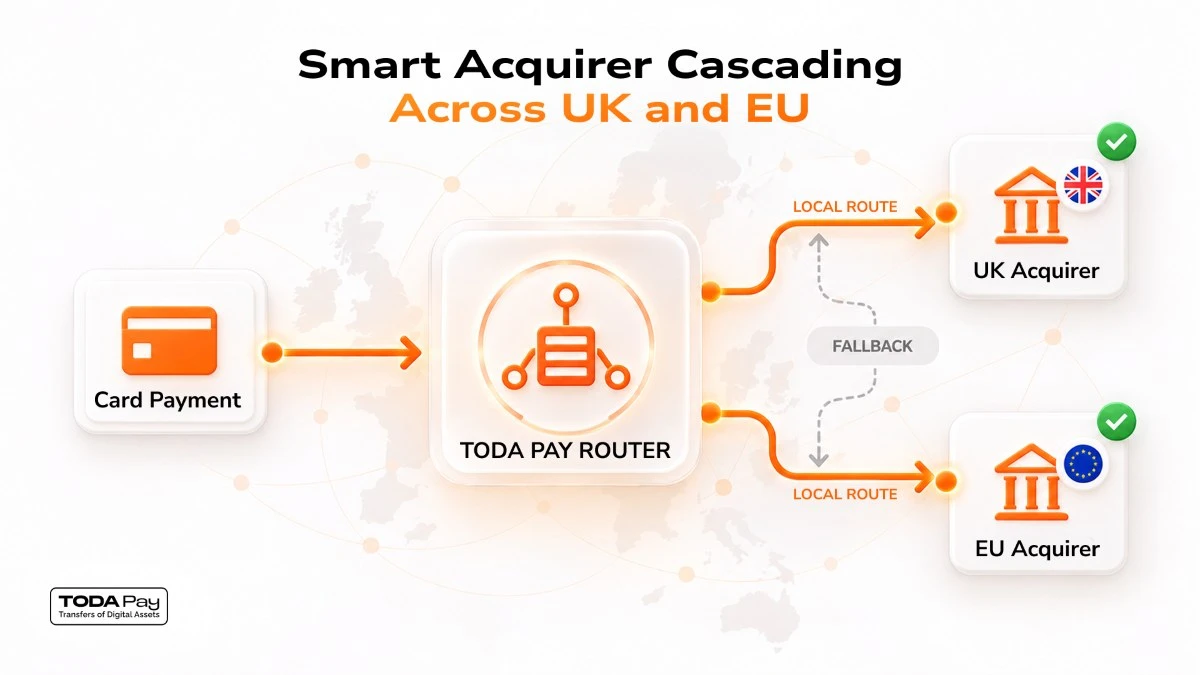
Intelligent payment routing heavily relies on BIN-based acquirer cascading. The post-Brexit acquiring split demands that businesses route UK-issued cards strictly to domestic UK endpoints. Conversely, continental European cards must remain within the EEA network. Processing transactions domestically avoids expensive cross-border interchange markups.
Therefore, local routing prevents foreign issuer risk filters from blocking legitimate transactions. Separating UK and EEA acquiring endpoints generates an immediate 2 to 5 percentage point authorization uplift. This strategic division represents a vital cost-saving measure for international digital merchants managing cross-border payments.
Deploying Smart Retry Logic for Soft Declines
Blindly hitting the payment gateway repeatedly damages merchant credibility. Conversely, algorithmic smart retry logic precisely targets soft declines for maximum recovery. Proper payment orchestration targets retry schedules around merchant-assigned reason codes, specific billing cycles, and local customer time zones.
Implementing these specific algorithmic rules recovers revenue without triggering costly network penalties.
-
Delay retries for generic "Do Not Honor" codes by at least 24 hours.
-
Attempt insufficient funds retries specifically on local consumer paydays.
-
Block hard declines permanently to avoid Visa Excessive Authorization Fees.
-
Limit total retry attempts to prevent scheme Network Integrity Fees.
Controlling retry frequency directly protects merchant processing accounts from compliance fines. Optimizing retry schedules mathematically increases revenue recovery while maintaining strict network compliance.
Improving Conversions Using EMV 3DS and Telemetry
Legacy card messaging provided extremely limited context to issuing banks. Modern EMV 3DS data sharing transforms this dynamic entirely. By utilizing protocol version 2.2 or higher, merchants feed critical data points directly to the card issuer. This includes device fingerprints, account tenure, behavioral risk signals, and delivery parameters.
Providing rich context builds immediate trust with the approving bank. Transmitting enhanced issuer telemetry secures a frictionless flow, driving conversions above 90%. Furthermore, this prevents false declines without forcing unnecessary friction on genuine shoppers trying to complete a purchase.
Building a Unified Payment Orchestration Architecture Layer
Scaling merchants must combine multiple strategies into a single automated payments layer. Platforms like TODA Pay unify network tokens, regional routing, telemetry enrichment, and fallback cascading into one comprehensive approach. Regulatory drivers heavily influence these technical decisions. For example, network tokens protect merchants from crossing Visa Acquirer Monitoring Program (VAMP) fraud thresholds.
Mapping specific transaction failures to exact orchestration solutions clarifies the required infrastructure.
-
Stale PAN Data: Deploy VTS/MDES network tokens to auto-update credentials instantly.
-
Brexit Cross-Border Declines: Implement a UK and EEA acquirer split to bypass regional risk filters.
-
Transient Soft Declines: Execute algorithmic smart cascading to safely recover failed payments.
Integrating these specific solutions structurally improves overall authorization rates. A unified orchestration layer fundamentally eliminates scheme non-compliance fines while maximizing accepted revenue.
Securing Revenue Through Advanced Merchant Card Services
Scaling enterprises must actively abandon static, single-acquirer setups. Finance leaders and heads of payments should run a comprehensive authorization audit immediately. This audit must segment transaction data by geography, specific card scheme, and credential vintage. Adopting multi-acquirer orchestration systematically protects gross processing volume from unnecessary friction.
Transitioning to a dynamic infrastructure guarantees maximum revenue retention across all global markets. Start optimizing your payment stack today by implementing high-performance Card Processing with TODA Pay to secure your bottom-line profitability.
Comments (0)